Creativity for Women’s Health
At the National Centre for Creative Health (NCCH), we define creative health as creative approaches and activities that benefit health and wellbeing. These activities include visual and performing arts, crafts, film, literature, cooking and creative engagement in nature, such as gardening. Creative health also encompasses innovative ways of designing and delivering health and care services, including co-production, education and workforce development. It can take place in homes, communities, cultural and heritage settings, as well as healthcare environments, contributing to the prevention of ill health, the promotion of healthy behaviours, the management of long-term conditions, and support for treatment and recovery across the life course.
To mark International Women’s Day on 8 March 2026, this blog explores how creative health can play a role in key areas of women’s health, from maternity and early years, to inclusion, mental wellbeing and wider health inequalities, highlighting the value of creative approaches in supporting women.
Creative Health: Maternity & Early Years
Maternity and early years are identified as a key clinical priority within the NHS Long Term Plan, particularly in light of the stark disparities in outcomes for pregnant women highlighted by the Mothers and Babies: Reducing Risk through Audits and Confidential Enquiries across the UK (MBRRACE) reports.
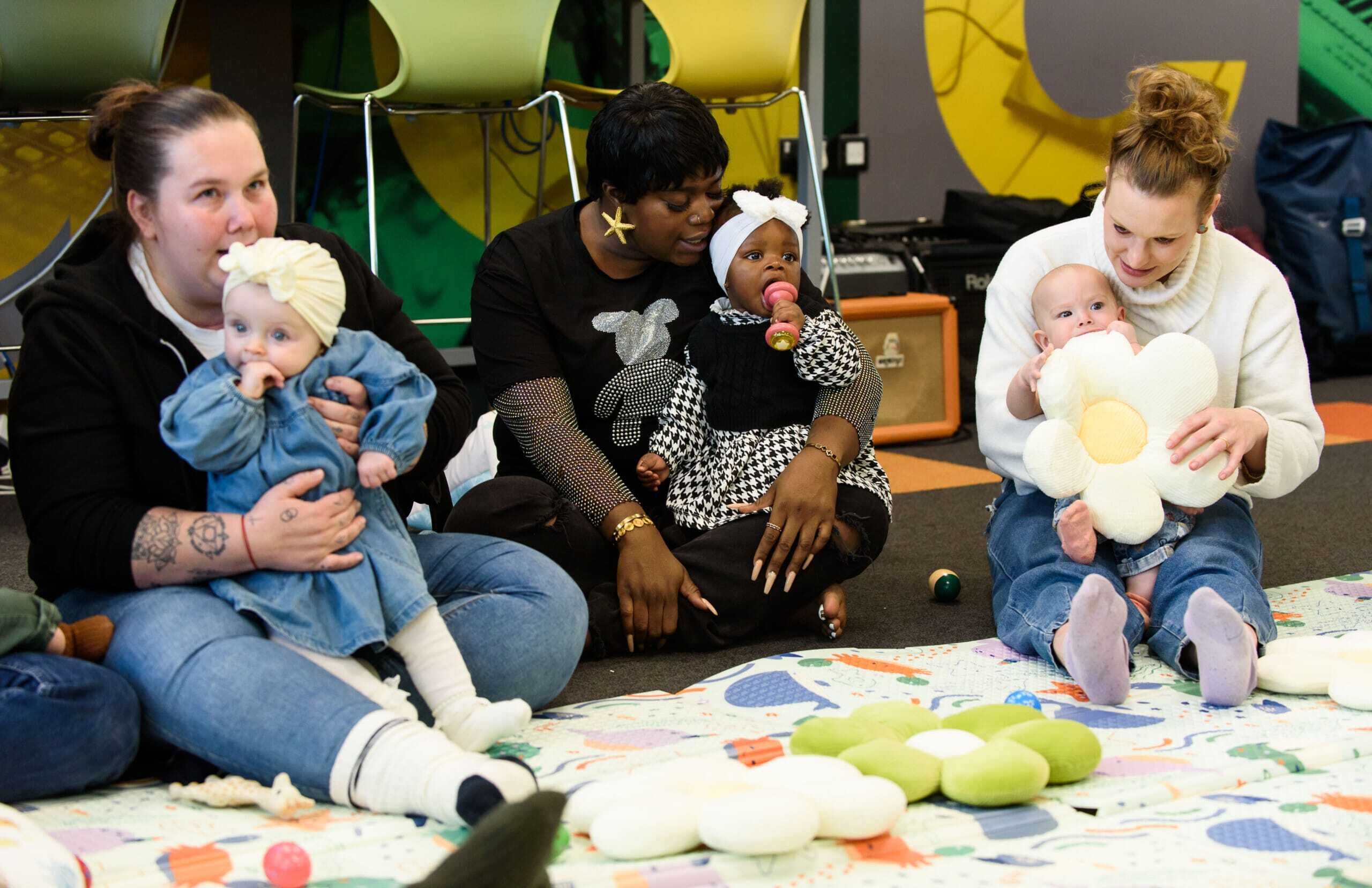
The World Health Organization (WHO) Scoping Review identifies a number of studies linking creative health to maternity, showing how the arts can be used before birth to reduce anxiety and improve readiness for parenthood, including listening to music to ease anxiety and pain during childbirth. In neonatal care, creative interventions can alleviate stress in parents and babies, helping to reduce anxiety and lower the risk of postnatal depression, while music has been shown to play an important role in strengthening mother–infant bonding.
Further initiatives such as BREATHE Arts Health Research - Melodies for mums project, the Muso Baby social prescribing pilot at Manchester Museum, Art at the Start in Scotland, and the Still Parents Project at the Whitworth Art Gallery demonstrate how creative health can engage diverse communities, open up conversations around loss, and provide vital emotional support in the earliest stages of life. As we mark International Women’s Day on 8 March, these approaches remind us that advancing women’s health means valuing compassionate, culturally responsive and creative models of care alongside clinical excellence.
Creative health is also evident with NHS teams. Section 51 of the Creative Health Research Round-Up Report 2025 presents “Supporting Perinatal Mental Health Through Songwriting in Medway” by Live Music Now. The piece describes how the organisation’s Lullaby model is being delivered in Medway in partnership with NHS perinatal mental health teams, engaging women who are pregnant or in the early postnatal period. Sessions are delivered in collaboration with Chatham and Wayfield Family Hubs, located in areas with the lowest levels of arts engagement. Fourteen families have taken part across two cohorts so far, with a further sixteen expected to participate. Parents who complete the Lullaby programme are invited to attend monthly informal, interactive family concerts, enabling them to stay connected with one another and with the musicians involved in the intervention. Impact is tracked using pre- and post-project wellbeing questionnaires completed by participants. For women who were particularly vulnerable or unable, or did not wish, to attend group sessions in person, bespoke online one-to-one Lullaby sessions were offered. The contribution provides practice-based insight into partnership working and adaptive delivery within perinatal mental health support.
Implementation of singing groups for postnatal depression: experiences of participants and professional stakeholders in the SHAPER-PND randomised controlled trial
Section 49 of the Creative Health Research Round-Up Report 2025 highlights “Implementation of Singing Groups for Postnatal Depression: Experiences of Participants and Professional Stakeholders in the SHAPER-PND Randomised Controlled Trial.” This paper reports on a qualitative study carried out alongside the SHAPER-PND randomised controlled trial, which evaluated group singing as support for women experiencing postnatal depression. While the main trial focused on effectiveness, this companion study explored how the intervention was experienced in practice, looking at its acceptability, feasibility and appropriateness in real-world health and community settings.
The study draws on interviews with mothers who participated in the singing groups, as well as facilitators and professionals involved in delivering the programme. It examines practical and relational factors such as emotional safety, group dynamics, referral pathways and facilitator skills, alongside what participants described as the “active ingredients” of the sessions. Findings suggest that group singing can provide a non-clinical, socially supportive and enjoyable space, particularly valuable during a period often marked by isolation and emotional vulnerability. The research also emphasises the importance of thoughtful design and skilled facilitation to ensure that creative group activities feel supportive rather than overwhelming.
Using creative practice for maternal mental health and wellbeing
An article published by the Maternal Mental Health Alliance (MMHA) (5 May 2023) explores how creative practice can support maternal mental health and wellbeing. Written from lived experience, it reflects on how activities such as stitching, knitting, journalling, colouring and pottery can provide comfort, structure and a sense of connection during the postnatal period. Drawing on both personal testimony and wider creative health research, the piece highlights how simple, accessible activities can promote relaxation, self-expression and peer support. Contributors describe how creative participation offered mindful moments, helped them feel less isolated, and created opportunities to connect with others in community settings. MMHA’s blog also points to the growing availability of creative health initiatives, including journaling projects and community arts groups for mothers and babies, emphasising that creative activity does not require artistic skill or expensive materials.
Creative health initiatives can help to decrease missed mammograms
NCCH’s resource on creative health in primary care highlights the Anfield & Everton #BeBreastSavvyLiverpool Campaign as an example of how creative approaches can improve women’s health outcomes in primary care. In North Liverpool, fewer than half of eligible women aged 50–71 were attending routine breast screening, contributing to delayed diagnosis in an area already experiencing entrenched health inequalities. Through the Health Equity Liverpool Project, a collaboration between Liverpool School of Tropical Medicine and local Primary Care Networks, clinicians, community organisations and local creatives worked together to understand why women were not attending.
In response, partners co-designed a creative, community-led campaign to speak directly to women’s concerns. The #BeBreastSavvyLiverpool Roadshow combined poetry, sewing activities, visual art, film and trusted local voices to create welcoming spaces where women could talk openly about mammograms, ask questions and rebuild confidence in screening. Supported by targeted outreach from GP practices, the campaign contributed to a reduction in missed (DNA) mammogram appointments of up to 24%. This example demonstrates how creative health approaches can address gendered barriers, build trust and support earlier diagnosis through culturally relevant engagement in primary care settings.
Summary
As we mark International Women’s Day, the research and examples highlighted in this blog show that creative health can play a practical role in improving women’s health. Studies link creative activities such as singing and music-making with reduced anxiety, stronger mother–infant bonding and support for women experiencing postnatal depression. Practice-based programmes delivered with NHS perinatal teams demonstrate how songwriting and group singing can be implemented safely and meaningfully, while lived experience accounts underline how simple activities like stitching, journalling or colouring can reduce isolation and support emotional wellbeing. Creative approaches are also being used in primary care, where community-led arts campaigns in North Liverpool were associated with a reduction of up to 24% in missed breast screening appointments.
Together, this evidence suggests that creative health can complement clinical care, helping to reduce anxiety, strengthen connection, support recovery and improve engagement with preventive services.
Author: Radhika Poojara, Communications Specialist, NCCH