Healthy Environments & Healthy Societies: Mobilising Creative Assets for a Healthier Planet & Healthier Communities
Overview written by Dr Linda J Thomson, Senior Research Fellow in Health Inequalities, UCL
Overview of Knowledge Exchange Event foregrounding Phase 3 Mobilising Community Assets projects.
Mobilising Community Assets to Tackle Health Inequalities (MCA) programme, MCA is a three-phase UK Research and Innovation (UKRI) funded Research Programme running from 2021 to 2027. It is coordinated by the Culture-Nature-Health Research Group at University College London (UCL), in partnership with the National Centre for Creative Health (NCCH) and funded by UK Research and Innovation (UKRI), led by Arts and Humanities Research Council (AHRC), with Biotechnology and Biological Sciences Research Council (BBSRC), Economic and Social Research Council (ESRC), Natural Environment Research Council (NERC) Medical Research Council (MRC). Mobilising Community Assets to Tackle Health Inequalities (MCA) has encourage the projects it has funded throughout the UK to share knowledge and approaches to integration of community assets into the integrated care structures that exist in the local communities.
Creative Planetary Health Knowledge Exchange Event
A knowledge exchange event foregrounding Phase 3 Mobilising Community Assets projects’ creative planetary health practices took place online on 29th May 2025. Two presentations were followed by discussion of three questions.
Presentations
- Prof Helen Chatterjee, Programme Director, Mobilising Community Assets, UCL: ‘From creative health to creative planetary health: how can practitioners and researchers contribute to the dual challenges of human health and the ecological crisis?’
- Dr Zoe Moula, Lecturer in Mental Health, and Arts4Us Co-investigator, Kings College London: ‘How can the arts address the health impacts of climate change?’
Presentation 1: From creative health to planetary health
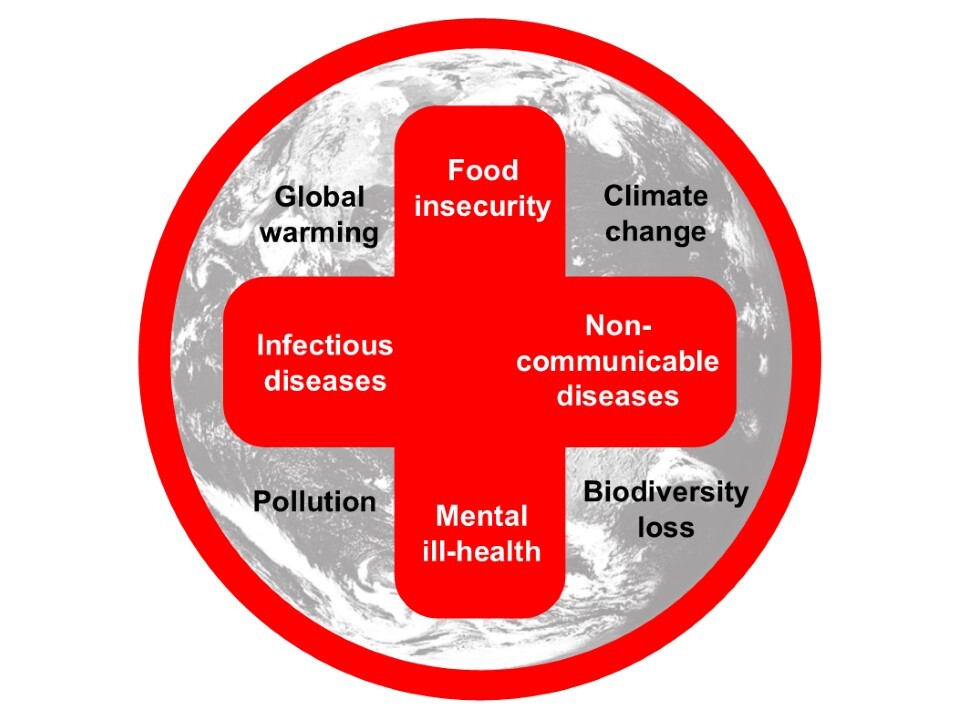
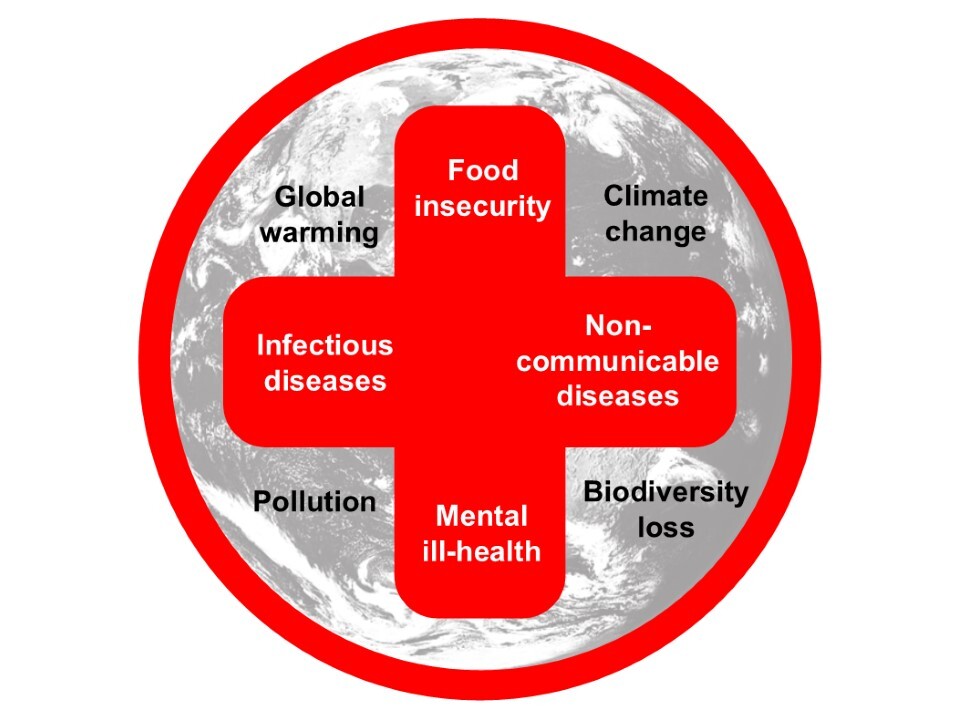
Whereas ‘planetary health’ is defined as “actions to create positive links between healthy environments and healthy societies to address the health impacts (on humans and the natural world) of human-caused disruptions to the Earth’s ecosystems” (Rockefeller Foundation-Lancet Commission on Planetary Health, 2015), ‘creative planetary health’ refers to care delivered through a planetary health lens by creative health practitioners using their expertise to tackle the environmental, commercial and social determinants of health.
Key concepts of planetary health
- Interdependent factors of climate change, biodiversity loss and pollution influence the earth’s ecosystems, economies and societies
- Planetary health impacts unequally on human health depending on the prevailing environmental, commercial and social determinants
- Climate injustice arises when poorer nations that have contributed far less to climate change, suffer disproportionately from its effects
- Intergenerational justice occurs where children, young people and future generations will experience greater effects from climate and ecological degradation
- Ecoanxiety can lead to psychological distress and feelings of guilt especially among people with pre-existing mental health conditions
- Informed by long-held Indigenous knowledge and understanding of the interconnectedness of people with the natural world
Research Evidence
Key findings from analysis of survey and interview evidence with creative health practitioners highlighted the need for inclusive practice, partnerships, sustainable funding, and environment-based health interventions. The research drew attention to practitioners’ socially determined views of health, and desire to work collaboratively for mutual support and shared resources. For more information, see: Thomson, L.J., Hume, V., Critten, A. & Chatterjee, H.J. (2025) Common features of environmentally and socially engaged community programmes addressing the intersecting challenges of planetary and human health: mixed methods analysis of survey and interview evidence from creative health practitioners. https://doi.org/10.3389/fpubh.2025.1449317
Research undertaken (2023-24) by a Creative Health Masters student in partnership with the Culture, Health & Wellbeing Alliance explored the link between creative and planetary health, and the intersection of creativity, nature, and wellbeing in community-based projects. The study recommended that facilitators should integrate nature connection into daily life and utilise nature as a co-facilitator, and funders should support flexible and adaptable projects, and invest in collaborative initiatives. For more information, see: https://www.culturehealthandwellbeing.org.uk/exploring-links-between-creative-health-and-planetary-health
Recommendations
Planetary health should:
- be integrated into practice, advocacy and leadership to recognise the rights of nature and safeguard the environment
- be embedded into education to advance research and understanding of the interdependency between humans and the environment
- acknowledge Indigenous wisdom and insights, and integrate Indigenous knowledge with western education to find transformative solutions
Policy makers should:
- be advised on the impacts of planetary health on public health
Creative health and healthcare practitioners should:
- deliver care through a planetary health lens using their expertise to address planetary health stressors
- minimise their negative impact on the planet and commit to sustainable practices
- collaborate with experts, other organisations and government bodies to actively engage in advocacy and policy related to planetary health
Presentation 2: How can the arts address the health impacts of climate change?
The arts use three strategies:
- Communication: Arts for raising awareness on climate-related issues and translating public health messages more clearly and accessibly.
- Adaption: Arts for climate change planning, preparedness and prevention.
- Mitigation: Arts for empowering communities to create change and support the development of climate solutions.
Implications
- Moving beyond notions of art as a vehicle for translating scientific knowledge
- Moving beyond institutional spaces (e.g., museums, galleries) to public spaces
- Arts in nature highlight the beauty of lived environment, promoting appreciation for nature and sense of place/belonging
- Avoiding artwork that instils didacticism and propagandisation
- Art–science collaborations should be valued as other scientific outputs
- More representative samples are needed and research on long-term benefits
Calls to action
- Recognise and elevate the arts
- Integrate the arts into public health strategies
- Increase investment in interdisciplinary collaborations
- Advance research on arts-based climate action
Questions and overview of responses
Q1. What kinds of blue/green/environmental activities are you or your project partners carrying out?
Activities include nature-based arts and crafts in community gardens and local landscapes; nature connection and green social prescribing; nature and community assets walks and tours; folk arts and local arts; outdoor and arts therapies; poetry competitions and poetry workshops in schools.
Q2. What types of research methods or approaches are you using to explore and understand the interactions between human health and planetary health?
Approaches include arts-based methods, such as creative diaries, drumming, and photovoice; nature connectedness questionnaires; walk and talk interviews; verbal surveys, poetic inquiry; and informal feedback from clients. One project collects examples of practice where climate, health and creativity intersect, and another uses post-qualitative and post-humanistic thinking to understand the interactions between human and planetary health.
Q3. How do you frame your work in relation to the health of the planet, climate change and other environmental issues?
Responses include awareness-raising through arts education; transitional, restorative and intergenerational justice; Indigenous knowledge systems; investigating nature connections through creativity; moving towards a more reciprocal engagement between humans and nature; and challenging the nature/culture duality.
Takeaways
- Planetary health concerns the interdependency between the health of humans and the health of the planet.
- As humanity is part of the natural world, humans have a responsibility to non-human creatures and their habitats that make up this ecosystem.
- Ranging from re-using and recycling to the wellbeing benefits of creative activities in green spaces, many projects incorporate the concept of planetary health in their practices.
- Adopting sustainable practices can tackle issues of social justice and human rights, and lead to long-term economic stability and social wellbeing, whilst also protecting the environment.