Using Creative Health to Enhance Patient and Service User Experience
Creative health offers a holistic, person-centred approach that strengthens patient and service-user experience across health and care. Evidence shared in this blog shows that creative activities can enhance emotional wellbeing, support communication, reduce anxiety and foster stronger relationships between individuals and the professionals who support them. At a system level, creative health can help to reduce pressures on overstretched health and social care services by supporting prevention, early intervention and self-management. Applied in places and communities, it can improve wellbeing, reduce inequalities and enhance social value.
Embedding creativity into inpatient care to strengthen emotional, social, and therapeutic outcomes
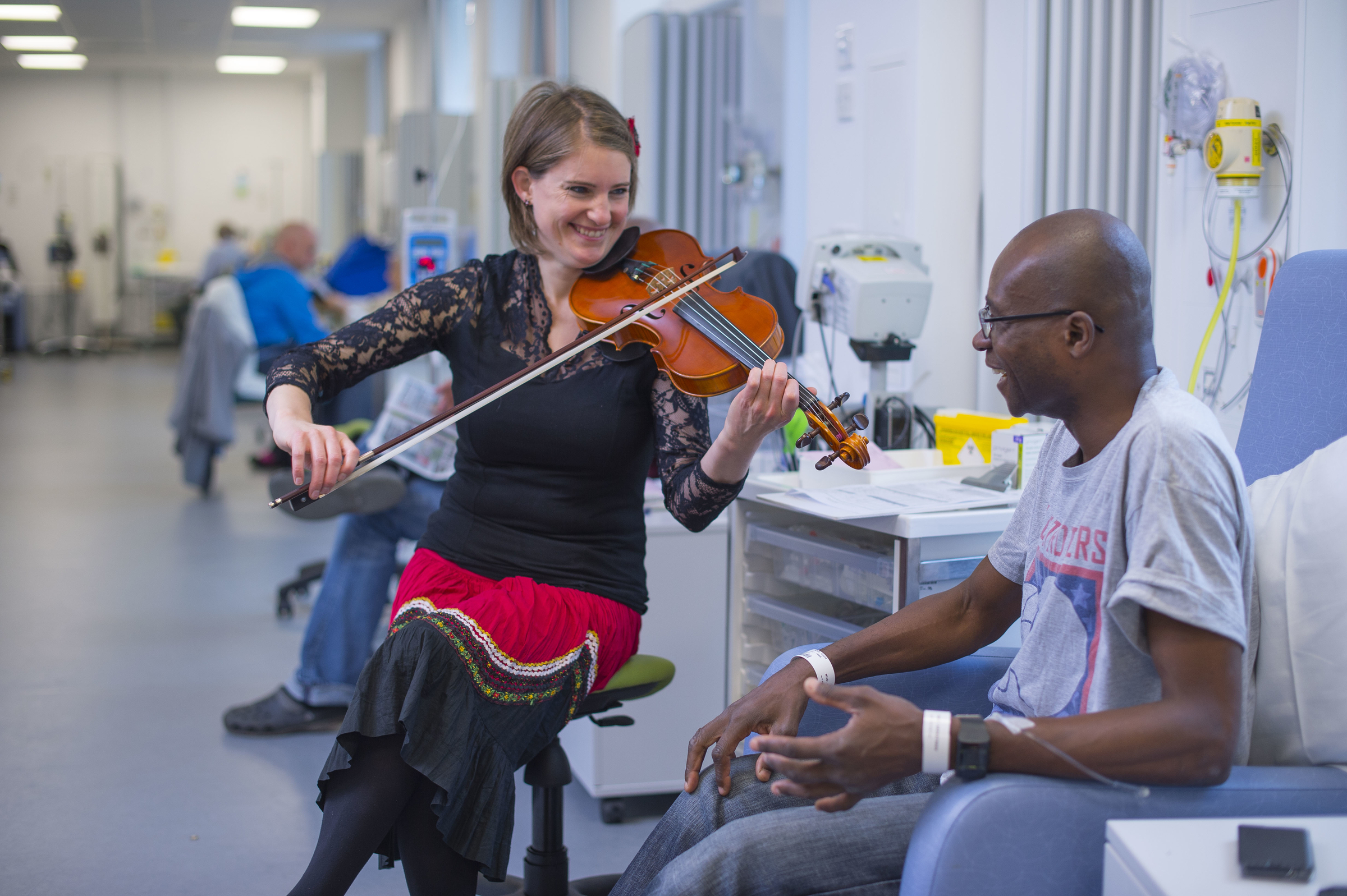
Research findings from the WHO Scoping Review – demonstrates that incorporating visual art, music, movement and poetry into healthcare settings can improve patient experience, reduce anxiety and even contribute to improved staff wellbeing and retention. Just two examples of the extensive evidence summarised are: 'The provision of arts activities, live music and theatre performances by patients' bedsides has been found to reduce anxiety and pain and improve mood and compliance with medical procedures in both children and adults' and 'Hospital arts programmes have been found to predict patient satisfaction and the likelihood that patients recommend a hospital to others'.
Creative activities can be thoughtfully integrated into inpatient settings to support mental health and wellbeing. The Creative Health Review (2023) highlights programmes such as Quench Arts’ Plugin project, which offers music-making opportunities for young people receiving inpatient mental health care and has been shown to improve emotional literacy, social connection and self-esteem. Research also shows the value of incorporating art and co-produced creative processes into the design of mental health units. The organisation Hospital Rooms puts this evidence into practice across NHS mental health hospitals, working with artists and patients to create calming, culturally informed environments that support recovery.
The Creative Health Toolkit
Evidence highlighted in the Creative Health Toolkit shows that creative health approaches can significantly enrich patients’ experiences in hospitals, mental health units and care homes. In clinical environments, art, design and participatory creative activities have been shown to reduce stress, support calmer atmospheres and strengthen human connection.
Creative health also plays a valuable role in mental health and residential care. Studies cited in the Toolkit show that culturally informed, co-produced creative programmes can help people engage earlier with support, foster a sense of autonomy and counteract stigma within mental health services. In care homes, a report from The Baring Foundation highlights how creative activity supports physical, cognitive and emotional wellbeing, particularly for people with dementia. Across all settings, the evidence points to a consistent conclusion: creative health strengthens relationships, enhances quality of life and offers meaningful opportunities for expression that traditional models of care alone cannot provide.
Barriers to Access and the Transformative Role of Creative Community Support
Insights from The Value of Creative Health: Perspectives from People with Lived Experience (Research Briefing No. 2, 2023), funded by UKRI–AHRC and produced by the University of Huddersfield team, show that one of the biggest barriers to engaging in creative or community-based activities is the lack of awareness among both service users and health professionals about what is available. A lived-experience contributor described how, after moving to a new area and struggling with anxiety, traditional clinical pathways left her feeling worse and without meaningful support. It was only when she was connected to community-based creative groups that she began to build confidence, find connection with others, and feel able to speak openly about mental health — illustrating how creative health can provide forms of relational, culturally grounded support that statutory services alone may not offer.
Creative Health in Westminster: Local Partnerships Supporting Service Users
The City of Westminster offers creative health initiatives that connect service users with cultural activities supporting mental and physical wellbeing. Through the Westminster Culture Network, local culture networks and libraries host regular meetings with Bromley-by-Bow Health, bringing together cultural partners, NHS link workers and service users to develop new referral pathways for residents experiencing health and deprivation challenges. One Westminster, the borough’s lead VCS organisation, runs cultural partnership projects with local arts organisations to benefit primary care patients and helps promote creative wellbeing opportunities through local NHS link workers and community groups. Additional programmes include Without Shape Without Form, which delivers wellbeing sessions in Westminster Libraries, and Dance Westminster, a free annual pan-disability dance competition produced by Step Change Studios encourages disabled residents to be more active through dance.
Creative Health in Local Systems: Learning from Birmingham
Birmingham City Council has developed a whole-system Creative Public Health approach to address rising health inequalities by embedding public health researchers in residence within major cultural organisations across the city. Working with Birmingham Museums Trust, Birmingham Hippodrome, Ikon Gallery and Midlands Arts Centre, the programme uses place-based research, co-production and ongoing evaluation to understand how arts, culture and heritage can improve health outcomes and service-user experience. This partnership model recognises creative organisations as local community assets that connect, empower and engage residents, helping to build an evidence base for Birmingham’s emerging Creative Health Strategy and ensuring that activity is shaped by the lived experiences of diverse communities.
Further Examples
A strong and expanding evidence base shows that creative health can significantly improve outcomes for a wide range of service users. As highlighted in the Mapping Creative Health in Norfolk and Suffolk (Creative Lives, 2024) report, creative, social and expressive activities support wellbeing for people with long-term physical or psychological conditions, including those who are lonely, socially isolated, or facing complex health challenges. National guidance reinforces this; the Creativity, Health and Wellbeing Alliance (CHWA) organisation has collated sector-wide research evidencing the impact of creative health, while the National Academy for Social Prescribing (NASP) summarises how creative approaches particularly benefit mental health service users, migrants, underserved populations, people in deprived areas and older adults with cognitive decline. Large-scale programmes also illustrate this impact in practice: AESOP’s Dance to Health has reduced falls among older adults by 58%, while King’s College London’s SHAPER research programme shows statistically significant improvements in postnatal depression, pain, motor function and symptoms associated with Parkinson’s and stroke. For those wishing to explore the evidence base further, Creative Arts East provides an accessible reading list of key national and local studies.
The Creative Health Communication Framework, 2024
Creative health can significantly improve patient and service user experience by creating clearer, safer and more empowering relationships between practitioners and participants. As outlined in The Creative Health Communication Framework (Hearst, 2024)—authored by Dr Jane Hearst, now Research and Policy Manager at the National Centre for Creative Health, the way practitioners communicate about their role has a direct influence on how service users engage with creative health provision. Hearst highlights that distinguishing between structuralist (provider-centred) and non-structuralist (service-user-centred) practice is essential for setting appropriate expectations, preventing burnout, and ensuring users feel respected as experts in their own experiences.
The framework also highlights how creative health providers can enhance patient and service user experience by choosing whether to work independently, act as sign-posters, or build formal partnerships. Each model offers different benefits: independence provides flexibility, signposting connects people to wider support, and collaborative teams enable more coordinated care for complex needs. Hearst notes that adapting elements of the NHS Care Programme Approach can help creative health organisations establish clear roles and shared goals, improving the overall coherence of user journeys.
Summary
Creative health offers more than a set of activities — it provides a key way of understanding, designing and delivering care. Across inpatient units, community programmes, neighbourhood models and local systems, the evidence shows that creativity can deepen connection, reduce inequalities and create environments where people feel heard, valued and able to participate in their own wellbeing. What emerges consistently is that service users benefit most when creative approaches are co-produced, culturally informed and rooted in the realities of people’s lives.
By centering lived experience, creative health helps challenge stigma, strengthen relationships and foster trust between communities and health services. Creative methods from spoken word and photography to immersive media and theatre give people accessible and meaningful ways to articulate their stories, influence service design and participate in decisions that affect their care. As health systems continue to shift toward prevention, community-based models and personalised care, creative health offers a powerful means of making those ambitions real. It supports more humane, responsive and equitable pathways and ensures that the voices of those who use services are not only heard, but actively shape the future of health and wellbeing.
Author: Radhika Poojara, Communications Specialist, NCCH