
Arts for the Blues
Delivered by: Research Centre for Arts and Wellbeing, Edge Hill University
In partnership with Health Innovation North West Coast, Alder Hey Children's Hospital, University of Salford
Funding: National Institute for Health and Care Research (NIHR) Invention for Innovation (i4i FAST)
Overview
Arts for the Blues is a research-driven, multi-modal arts therapy intervention co-developed by Edge Hill University and the University of Salford with ongoing input from young people and their families. Piloted in schools and health settings, the programme addresses emotional and behavioural difficulties, wellbeing, and quality of life for children and young people, particularly those facing challenges such as loneliness and isolation. The intervention is delivered in partnership with NHS, local authorities, and community organisations, and is now being adapted into a digital platform (e-Arts-for-the-Blues) to increase accessibility and support remote group therapy. The emerging evidence demonstrates the effectiveness of multi-modal, co-designed arts therapies in improving mental health and wellbeing for children and young people (CYP).
Approaches & Methodology
Arts for the Blues employs an evidence-based creative psychotherapy approach, integrating music, dance, drama, visual arts, creative writing, and digital storytelling. The methodology is co-designed with children and therapists, prioritising participant choice and needs over commitment to a single modality. Sessions are structured to foster self-expression, empowerment, and coping skills within a safe group environment. The programme uses creative tools and props to enable storytelling and emotional articulation, and is evaluated through quantitative, qualitative and creative research methods, including RCTs and participatory feedback.
e-Arts-for-the-Blues has been developed to offer digital creative activity options for therapists and CYP to use synchronously during group therapy. It has followed an extensive co-design process. When the development of the platform is completed, CYP will be encouraged to engage in digital creative activities, interact with each other through artistic means, create joint work and share artwork they produced on their own or with others in the group. They will be able to enter the platform using avatars of their choice. Digital and digitally-enabled artmaking, drama, dancing/moving, sand tray, musical interactions, and creative/reflective writing, will become possible during the sessions for CYP to engage with on their own and with other CYP in the group in the presence of the therapist. They will also be allowed to work in between sessions, ensuring continuation of the work in a safe way. Appropriate activities will be selected, refined and subsequently get integrated in the digital platform prototype specifically developed for CYP.
A responsive design and web-based approach will ensure the broadest entry points and accessibility across a range of devices such as tablets, kiosks, smartphones, laptops and desktop computers. In cases where none of these will be available, CYP will be invited to use school computers after the completion of the school day or take devices home. This will ensure that computer poverty will not become an obstacle in reaching out and engaging CYP who may need psychological support the most.
Aims & Objectives
The primary aim is to improve mental health and wellbeing among children and young people by providing accessible, engaging digital arts-based interventions.
Objectives include:
- Reducing emotional and behavioural difficulties.
- Enhancing wellbeing, life functioning, and quality of life.
- Supporting self-expression, emotional regulation, and coping skills.
- Making arts therapies accessible through both in-person and digital delivery.
Outcomes & Measured Impact
Thus far quantitative results (Moula et al 2020) suggested that the Arts for the Blues intervention was promising in improving emotional and behavioural difficulties assessed through the Strengths and Difficulties Questionnaire (SDQ); wellbeing and life functioning assessed through the Child Outcome Rating Scale (CORS) and health-related quality of life assessed through EQ-5D-Y. These improvements were sustained for up to six months after the end of the intervention period, making this the first study to capture this long-standing impact of arts therapies on children’s mental health.
It was also interesting that children attending the Arts for the Blues interventions experienced improved quality of sleep (Moula et al 2020). This was captured through activity bracelets with data showing that children who attended the arts therapies intervention slept for longer with fewer interruptions. No significant differences were found between different arts modalities, supporting the multi-modal approach.
Quantitative results from a second study in schools (Karkou et al under review) followed an RCT design and involved 175 children, showed significant improvements for mental wellbeing measured via the Warwick-Edinburgh Mental Wellbeing Scale (WEMWBS), which were sustained for three months after the end of the intervention.
The digital development will be evaluated using the System Useability Scale (SUS), while for children we will use an adapted version of SUS. Focus groups with verbal and artistic data (e.g., creative writing, drawings, gestures and postures) will also be collected to enable the research team to understand some of the numerical data collected through SUS.
References:
Moula Z, Karkou V and Powell J (2020). An investigation of the effectiveness of arts therapies interventions on measures of quality of life and wellbeing: A pilot randomised controlled study in mainstream primary schools, Frontiers in Psychology. https://doi.org/10.3389/fpsyg.2020.586134
Karkou V, Omylinska-Thurston J, Thurston S, Moula Z, Pringle L, Powell J, Liverpool S, Clark R, Fletcher K, Bull M, Batsios K, Kumar A, Ramkisson R (under review) Arts for the Blues for children and young people: the development and testing of a manual of an evidence-based creative psychological group intervention, in S Hackett and J Bourne (eds) Advancing Arts Therapies through Manualized interventions for Treatment and Training, Cambridge Scholars Publishing
Key Enablers
- Co-design and co-production with children and therapists.
- Multi-modal, flexible approach tailored to participant needs.
- Strong partnerships with NHS, local authorities, and research institutions.
- Use of creative devices and digital innovation to enhance engagement and accessibility.
Key Challenges/Barriers
- Addressing long waits and travel burdens for in-person mental health support, especially in underserved regions.
- Addressing digital poverty by ensuring digital access and engagement for remote group therapy.
- Sustaining impact and engagement beyond the intervention period.
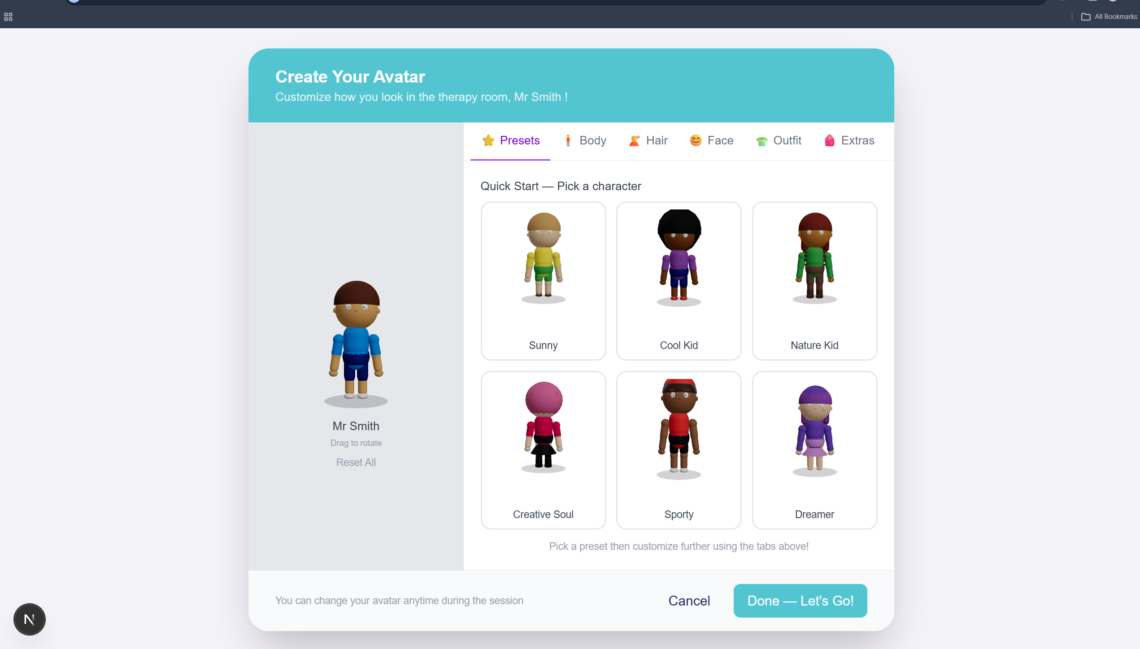
Figure 1: CYP will be able to enter the platform using avatars of their choice
Figure 2: Examples of the digital and digitally-enabled drama (drama corners), musical interactions (music corner) on the platform.
Demographics, Settings & Referral Routes
Demographics: The programme serves early years, children, adolescents, young adults, sexual and gender minorities, ethnic minorities, neurodivergent individuals, people with disabilities, those living in deprived areas, care leavers, and intersectional groups.
Settings: Delivery settings include schools, health centres, community hubs, allied health clinics, libraries, museums, theatres, community centres, faith settings, festivals, youth clubs, and online platforms.
Referral Routes: Participants are recruited via secondary care professionals (Allied Health Professionals (AHPs), Occupational Therapists (OTs), community mental health teams, psychiatrists), digital referral platforms, and through partnerships with schools and community organisations.
Evaluation Methods
Evaluation combines formal internal evaluation, independent research, validated outcome measures (SDQ, WEMWBS, EQ-5D-Y, RCADS, CORS), participatory and co-produced evaluation, and case study/narrative methods. The programme is committed to ethical practice, safeguarding, inclusivity and participant consent, with ongoing research to refine and evidence impact.
Participant & Stakeholder Feedback
Qualitative results from the first research in schools (Moula et al 2022) highlighted that children valued the opportunity for self-expression, stress relief, and creative discovery. They reported feeling happier at school, improved relationships, and better emotional regulation. Qualitative feedback emphasises the importance of creative devices for storytelling and the empowerment gained through group participation, examples:
Some children were surprised to discover their creativity, as one of them said
“I didn’t know I have the capacity to be creative”.
Some children also said that they were able to articulate their feelings better:
“I was sharing things that I was not used to sharing with anyone else.” This was enabled by the use of creative devices and props: “I could tell my own story through my own puppet, but nobody knows if it’s a true story or if I made it all up.”
Other children talked about being able to regulate their feelings better. One child for example, noted that as she became more patient, she experienced less conflicts with her siblings and they were able to develop a warmer relationship: “I’m fighting less with my brothers, and I control my anger. I try not to respond immediately when something happens and take my own time when I need it.”
Reference: Moula, Z, Powell J, and Karkou V (2022). Qualitative and Arts-Based Evidence from Children Participating in a Pilot Randomised Controlled Study of School-Based Arts Therapies. Children, 9(6), 890. https://doi.org/10.3390/children9060890
Alignment with National Strategy & System Learning
Arts for the Blues aligns with national strategies for digital technology, health inequalities, evidence and impact, and expanding healthcare into community settings. The digital platform (e-Arts-for-the-Blues) is designed to address barriers to access, reduce waiting times, and support remote delivery, contributing to system learning and innovation in mental health care.
Further information: https://www.edgehill.ac.uk/research/healthresearchinstitute/research-centre-for-arts-and-wellbeing/research/children-and-families/
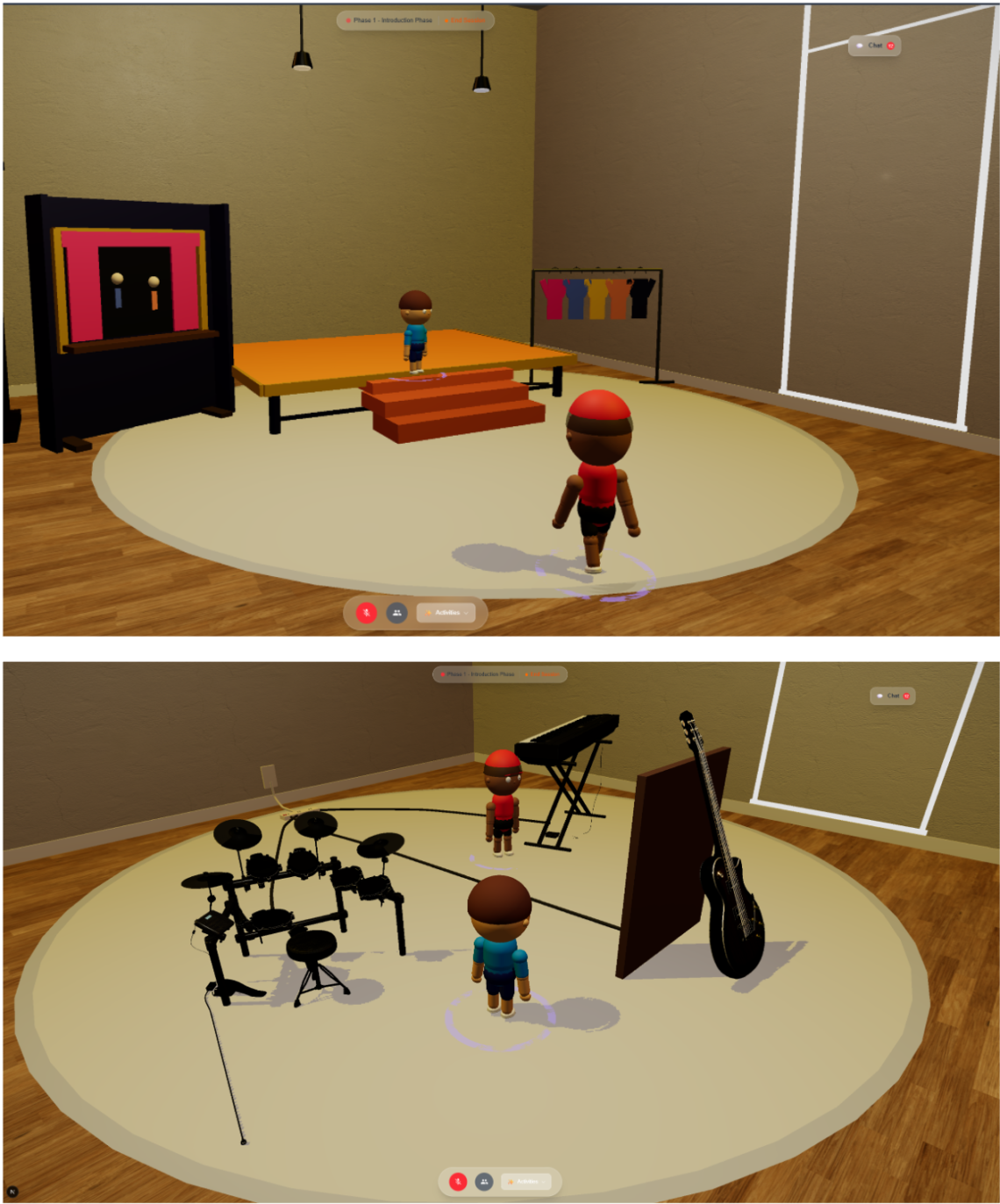
Figure 2.
This Case Study was submitted as part of a call out for Createch Case Studies, and demonstrates good practice in digital innovation within creative health.
Innovation & Digital Transformation
The programme is pioneering in its use of a multi-modal, co-designed arts therapy model and its development of a digital platform to offer remote group therapy. Digital innovation includes interactive games, videos, and creative tools, expanding access and engagement for children and young people. Its evidence-based collaborative approach, strong partnerships, and digital innovation offer a scalable, inclusive model for addressing mental health challenges and reducing barriers to care.