
MELVA Digital Programme Supporting Mental Health Education
Created by: Mortal Fools
Funding: North East Combined Authority, Arts Council England, Northumberland County Council, NHS Northumberland Clinical Commissioning Group, Kavli Trust
“It helped me to recognise my emotions and understand my feelings. The sessions are fun because there are so many different activities to do. I think all children should get the chance to do MELVA.” - Year 6 pupil
Overview
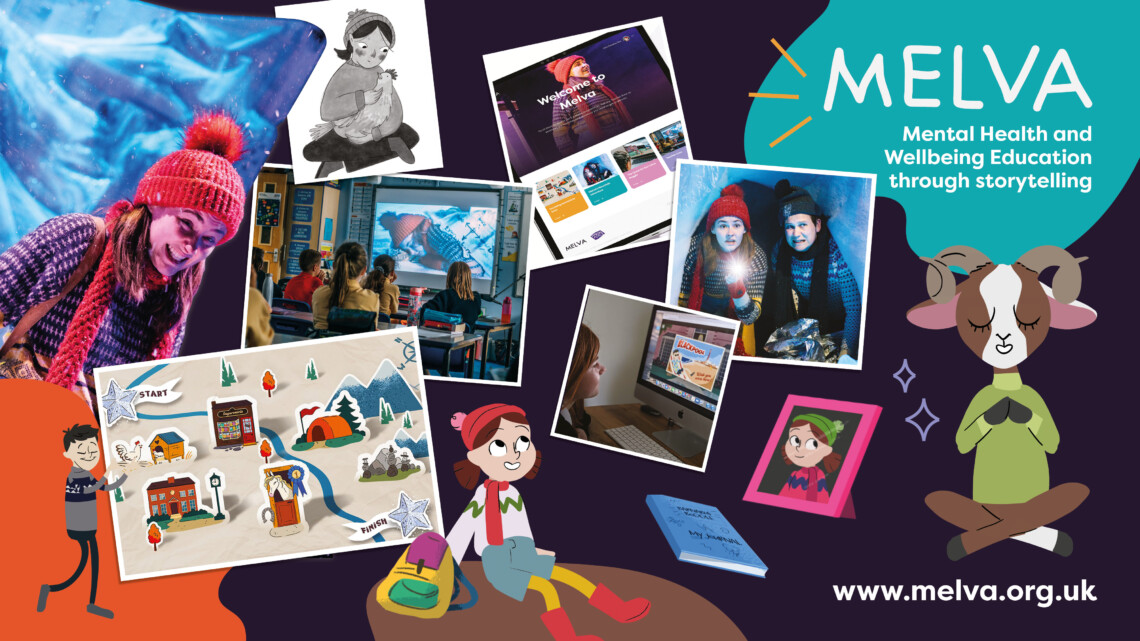
MELVA is a creative, whole school wellbeing programme used in classrooms across England. Children meet Melva, a fictional girl who feels “worrits” bubbling in her belly when life gets tricky. Melva supports pupils to develop emotional literacy, resilience, self-management and confidence through interactive storytelling, filmed-theatre, games and digital resources while supporting teachers to meet wellbeing learning objectives.
Developed by Mortal Fools, MELVA responds to the growing wellbeing crisis facing children in the UK, where NHS data shows that one in five young people aged 8–16 now experience a probable mental health disorder. Schools are one of the most effective places for early intervention: they are where children spend most of their time, where relationships are formed and where many feel more able to seek support. Research shows that children and young people want mental health education that is regular, relatable and delivered in safe, flexible ways. MELVA has been created in direct response to this need, meeting children where they are while giving teachers the confidence, structure and tools to embed wellbeing consistently across school life.
What began as a small pilot in Northumberland has grown into a nationally scalable programme that now reaches around 7,000 children each year across more than 100 primary schools and educational settings. Its growth continues to be shaped by strong partnerships across public health, NHS services, local authorities, creative agencies, and schools.
Approaches & Methodology
MELVA’s approach is grounded in creative practice, neuroscience and evidence based wellbeing frameworks. Structured, year group specific activities help children recognise and understand their feelings, talk openly about worries and develop simple strategies to manage emotional and physical responses. The digital platform supports robust, scalable delivery and enables schools to track engagement at individual, class and school-wide levels. When embedded over multiple years, MELVA builds a shared language and consistent environment for emotional growth. Teachers are supported through professional learning, peer networks, and practical tools for gathering and interpreting wellbeing data, strengthening confidence and school-wide capacity.
Aims & Objectives
The primary aim is to improve children’s mental health and wellbeing outcomes through early, creative intervention. Its objectives are to:
- Strengthen children’s understanding of mental health and emotional literacy
- Equip children with practical, lifelong self‑management tools
- Reduce wellbeing‑related absences and referrals to specialist services
- Support schools to deliver sustainable, high‑quality mental health education
- Enhance educator wellbeing, confidence, and resilience
- Align with system priorities around prevention and early intervention
Outcomes & Measured Impact
MELVA has demonstrated significant impact across participating schools:
- 94% of children show improved understanding of mental health
- 99% demonstrate increased knowledge of practical self‑management tools
- In 2024/25, 113 schools took part, engaging 7,000 children and delivering 2,300+ sessions
- Over 100 staff accessed 18 hours of CPD
Evaluation combines baseline and end‑of‑programme assessments, session feedback, case studies, and teacher focus groups. MELVA won the 2025 Children & Young People Now Award for PSHE Education and was a finalist in two further national awards.
Key Challenges & Barriers
- Addressing the scale of the children’s mental health crisis and the pressure on statutory services.
- Supporting schools to deliver mental health education amid teacher burnout and workforce stress.
- Ensuring digital access and engagement across diverse school and community settings.
- Sustaining multi-year engagement and embedding a whole-school approach.

Demographics, Settings & Referral Routes
Demographics: MELVA supports children aged 7–11, including neurodivergent children, children with learning disabilities, communities impacted by inequality, looked‑after children, care leavers and children experiencing multiple or intersectional disadvantages.
Settings: The programme is delivered in primary schools, specialist provision, community health hubs, youth settings and online.
Referral Routes: Schools sign up directly through the MELVA portal. Engagement is supported through schools and education services, public health teams, community partners, outreach events, social media and word of mouth. Regional and national partners champion the programme across health and education networks.
Evaluation Methods
Evaluation methods include routine monitoring data, validated outcome measures (e.g., WEMWBS, EQ-5D, PHQ-9, GAD-7), participatory and co-produced evaluation, case study and narrative evaluation, formal internal evaluation and independent research. Teachers assess children’s understanding at the start and end of the programme, with data submitted via the MELVA portal to generate progress reports. Teacher focus groups and case study templates provide deeper qualitative insights.
Participant & Stakeholder Feedback
Feedback from teachers, pupils, and school leaders is overwhelmingly positive. Teachers report improved emotional resilience and self-management among children, reduced friendship issues and greater confidence in discussing wellbeing.
Pupils describe MELVA as fun, helpful for recognising emotions and valuable for learning practical strategies. Staff value the training, support, and quality of resources.
“The children really look forward to the session each week. The children have developed their emotional resilience and now understand a range of strategies to help them to understand and manage their emotions.” - Primary School Head Teacher
“Children are now more able to discuss their wellbeing and verbalise examples to support the discussions we have had in class. They are using practical strategies such as finger breathing when they need to and will relate what they’re thinking to things they have talked about on MELVA. The class really benefited from taking part” - Primary School Teacher
Alignment with National Strategy & System Learning
MELVA aligns with national strategies for workforce development, digital technology, evidence and impact, health inequalities, self-management, planning and commissioning, and the wider determinants of health. The programme supports system-level priorities around prevention, early intervention, and reducing pressure on statutory services, offering a replicable model for integrating creative health into education.
Further Information: https://melva.org.uk/
MELVA Images © Mortal Fools
This Case Study was submitted as part of a call out for Createch Case Studies, and demonstrates good practice in digital innovation within creative health.
Innovation & Digital Transformation
MELVA exemplifies digital innovation in mental health education, using creative storytelling, gamified learning, and a robust digital platform to deliver scalable, evidence-based interventions to address the children’s mental health crisis. By equipping children and educators with practical tools, fostering a whole-school approach, and aligning with national health priorities, MELVA offers a replicable model for early intervention, prevention, and sustainable wellbeing education. The programme’s data-driven approach enables continuous improvement and system learning, while new creative interventions (e.g., online games, illustrated novels) expand its reach and impact.