
Moments of Grace
Delivered by: On the Record CIC
In partnership with Kingston School of Nursing
Funding: Historic England, Stanley Picker Gallery, Lambeth Community Connections
Overview
Moments of Grace is a pilot for an oral history installation conceived by On the Record CIC (Laura Khan Mitchison, Nicole Robson, Steve Urquhart), in collaboration with Kingston School of Nursing and other partners. The full project (currently seeking funding) would explore how a century of care might be distilled into a 24-hour, time-bending shift, inviting audiences to surrender their time-keeping devices and experience care as shaped by the rhythms of nursing rather than the clock.
Set in a communal environment with a kinetic light sculpture marking the hours, Moments of Grace hopes to synchronise real nursing stories and original music to the actual time of day, creating a living archive of care, attentiveness, and memory. The proposed installation is intended to foster reflection on the lived experience of nurses and the temporal pressures that shape care, with the aim of supporting workforce wellbeing and intergenerational dialogue.
Moments of Grace offers a powerful, immersive approach to understanding and supporting workforce wellbeing in nursing. By centring lived experience, creative practice, and digital innovation, the project provides a replicable model for reflective practice, intergenerational learning, and system change in health and care.
Approaches & Methodology
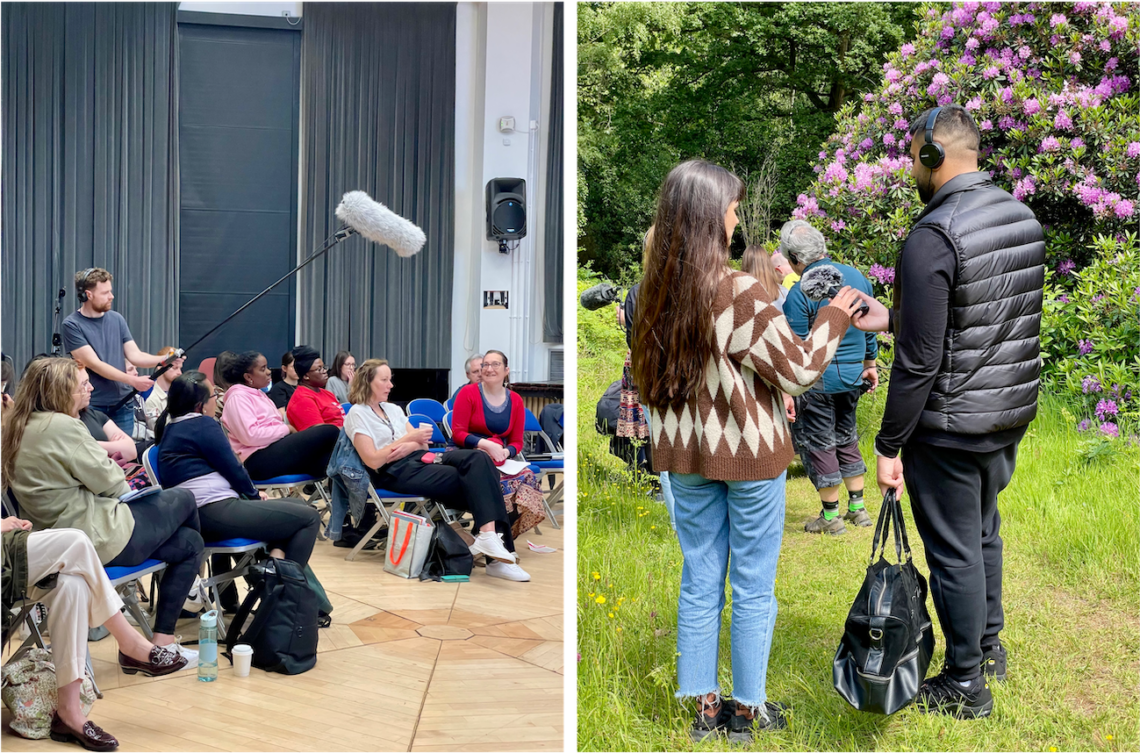
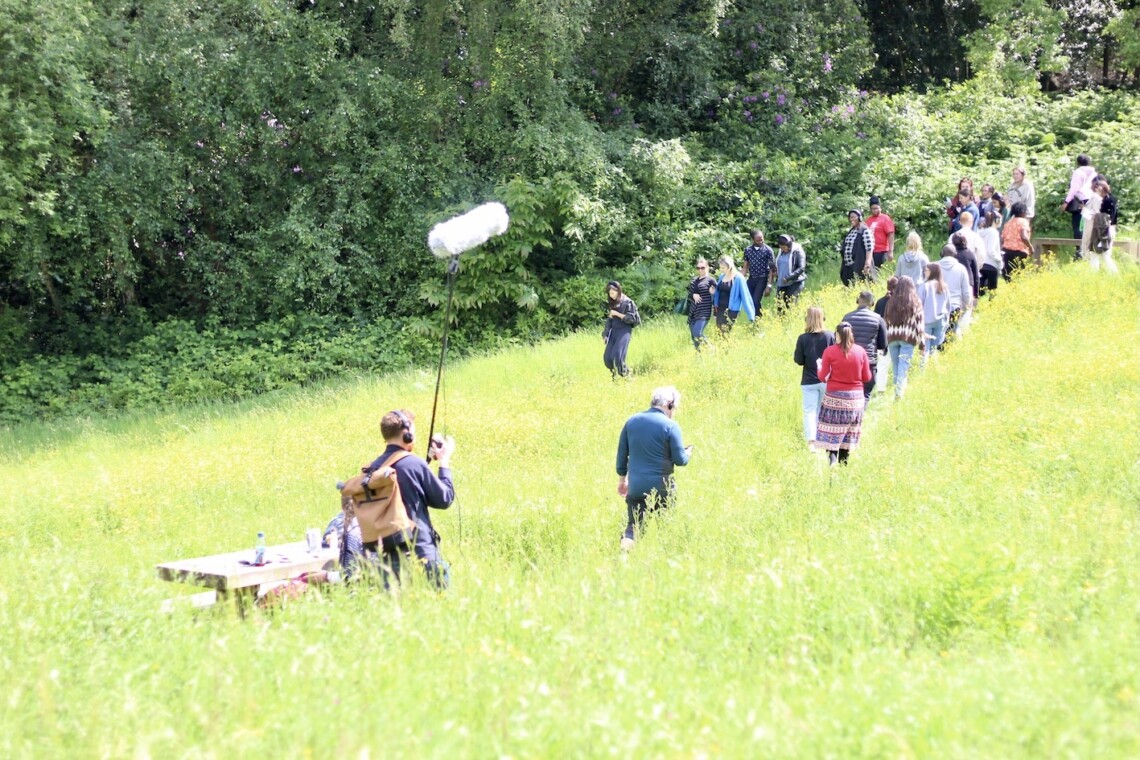
Moments of Grace employs participatory arts, lived experience leadership, and trauma-informed practice. Nurses and midwives were trained to record oral histories and exchange audio diaries, while mental health nursing students participated in reflective practice sessions prompted by ex-patients. The project’s methodology is co-creative, with participants reconvening to identify key themes and stories, which were then interpreted musically and performed in historic nursing sites. Audience movement within the installation triggers non-narrative audio layers, such as archival echoes and field recordings, creating a dynamic, interactive environment. The approach is place-based, connecting creativity to local identity and heritage, and is continually refined with input from lived-experience consultants.
Aims & Objectives
Moments of Grace aims to:
- Illuminate the impact of time pressure and temporal cultures on nursing practice and workforce wellbeing.
- Foster protected reflective practice and intergenerational exchange among nurses and students.
- Use oral history, spatial audio, and interaction design to surface workforce wellbeing issues identified by nurses themselves.
- Create a public programme and touring installation that supports reflection, learning, and system change.
Outcomes & Measured Impact
Participant questionnaires and focus groups revealed that most nurses and students felt more connected to colleagues and patients, valued protected time to reflect on practice, and experienced a shift in their perception of time in care. The project’s outputs include an award-winning digital pilot, a R&D showcase of the proposed installation at Stanley Picker Gallery, and plans for a full 24-hour touring installation and digital toolkit. The project has prompted participants to reconsider the relational aspects of care, the importance of presence, and the need for regular reflective practice.
Key Enablers
- Nurse managers and educators enabling participation during paid work time.
- Creation of protected space for peer learning, reflection, and knowledge exchange.
- Cross-sector collaboration between artists, academics, and NHS staff.
- Engagement of lived-experience consultants and accessibility experts.
Key Challenges/Barriers
- Changes to NHS estate redevelopment timelines and capital constraints.
- Shifts in local arts infrastructure, requiring flexible delivery routes not dependent on NHS funding.
- The need to continually adapt the project in response to evolving workforce and system pressures.
Images © Fatimah Zahmoul, On the Record
Demographics, Settings & Referral Routes
Demographics; Moments of Grace targets working-age adults, young adults, older adults, people with physical and hidden disabilities, neurodivergent people, and those with sensory impairments.
Settings: The digital pilot and proposed installation are designed for acute hospitals, community health hubs, museums, galleries, online platforms, and educational settings, with a focus on nursing, health inequalities, and integrated care teams.
Referral Routes: Participants are recruited through education and specialist pathways, such as schools, job centres, and carer support organisations, as well as through other community and professional networks.
Evaluation & Ethics Methods
Evaluation methods include routine monitoring data (participant numbers, demographics, attendance, surveys) and formal internal evaluation by the delivering organisation. The project uses post-session questionnaires and facilitated group reflection to capture shifts in perception and practice, with a commitment to trauma-informed and ethical engagement.
Participant & Stakeholder Feedback
Feedback from participants has been highly positive, with nurses and students reporting increased connection, inspiration, and a re-evaluation of the value of presence and reflection in care. Quotes highlight the importance of human moments, the challenges of time pressure, and the need for regular reflective practice, including:
- “The NHS is like one big piece of clockwork. It’s all the little wheels in the grandfather clock. One cog might change, but it takes something mammoth for the whole system to change.”
- “I feel like I’ve noticed how creative caring can be through taking part in this project. It’s inspired me.”
- “I value the space that has been held for us to reflect on sound and listening, its importance in nursing.”
- “Regular reflective practice for students after placement is needed.”
The project has inspired participants to consider creative approaches to care and to address power imbalances between staff and patients.
“I like being busy on the acute wards. I used to feel guilty if I stopped to play a game with the patients. Then one of the patients said to me once, ‘you are always so busy, you’re never sitting with us.’ And now I’ve completely readjusted my idea of what time was on a shift. Being present with them is important.”
“It’s prompted me to think about how I can work to reduce the power imbalance between staff and patients on an acute ward.”
Alignment with National Strategy & System Learning
Moments of Grace aligns with national priorities for workforce development, health inequalities, digital technology, and the wider determinants of health. The project supports system learning by surfacing the lived realities of nursing, promoting reflective practice, and providing a replicable model for cross-sector collaboration and digital engagement.
Further Information:
This Case Study was submitted as part of a call out for Createch Case Studies, and demonstrates good practice in digital innovation within creative health.
Innovation & Digital Transformation
Moments of Grace explores how oral history, spatial audio, kinetic sculpture and interactive design might be integrated into a single immersive experience. The project’s digital outputs, including an award-winning audio sketch and plans for a digital installation, demonstrate the potential for technology to support reflection, learning, and wellbeing in health and care settings.