
Music, Dementia, Technology: Designing New Musical Technologies for Older Adults' Wellbeing
Delivered by: Multidisciplinary team at the University of Sheffield
In partnership with Bela (Augmented Instruments Ltd), National Activity Providers Association, and several community and residential care settings across the UK
Funding: UK Research and Innovation (UKRI) Future Leaders Fellowships
Overview
This ongoing, nationally scaled research project, led by Jennifer MacRitchie (PI), Jon Pigrem, Justin Christensen, Michael Neokleous, Renee Timmers, Andrew McPherson and Luc de Witte, investigates how emerging technologies can enhance opportunities for older adults living with dementia and their carers to interact with music. The project is rooted in Sheffield but operates across the UK, collaborating with community and residential care settings, technology partners, and national organisations. The programme aims to radically rethink the design of musical experiences for people with dementia, prioritising agency, creativity, and relationality through a strengths-based, participatory approach.
Approaches & Methodology
The project is grounded in co-design and participatory arts, with people living with dementia actively shaping the development of new musical technologies. Researchers from music, psychology, and engineering collaborate to identify needs, rewards, and barriers for older adults and carers in using musical interfaces. The methodology includes structured workshops, narrative evaluation, and independent research, with iterative prototyping and real-world testing in care homes and community hubs. The approach moves beyond the medical model, focusing on care ethics, reciprocity, and knowledge exchange between artists, clinicians, technologists, and participants.
Aims & Objectives
The project aims to:
- Evidence the needs, rewards, and barriers for older adults with cognitive impairments and their carers in using musical interfaces.
- Co-develop tools and technologies that facilitate meaningful music interaction.
- Optimise these interfaces for maximum usage, enjoyment, wellbeing, agency, and social integration.
- Spotlight the strengths and creative capacities of people living with dementia, enhancing their opportunities for agency and relationship-building.
Outcomes & Measured Impact
Key outcomes include the co-design and development of innovative technologies for musical interaction, such as the Slider Box/Audio Playgrounds (a mixing desk analogy for creating music from pre-programmed stems), JOMI (AI-enabled software for musical improvisation), and adaptations of the Music Memory Makers Duet System (devices with tactile controls for music playback). Studies show that “spotlighting”—enabling people with dementia to meaningfully control music—enhances engagement and empowerment. The project has produced a range of physical devices and digital experiences, with ongoing video-based measurement of engagement and qualitative feedback from care partners and participants.
Key Enablers
- Deep collaboration with local organisations such as Age UK Sheffield, Darnall Well Being, and Sheffield Memory Hub, which facilitate sessions and participant engagement.
- Partnerships with technology companies (e.g., Bela/Augmented Instruments Ltd) and national activity providers.
- A participatory, strengths-based approach that values lived experience and co-production.
- Support from UKRI and a network of care settings across the UK.
Key Challenges/Barriers
- Addressing the diversity of creative needs among people living with dementia.
- Ensuring accessibility and usability of new technologies for a wide range of cognitive and physical abilities.
- Overcoming barriers to digital inclusion in care home and community settings.
- Sustaining engagement and scaling innovations beyond pilot sites.
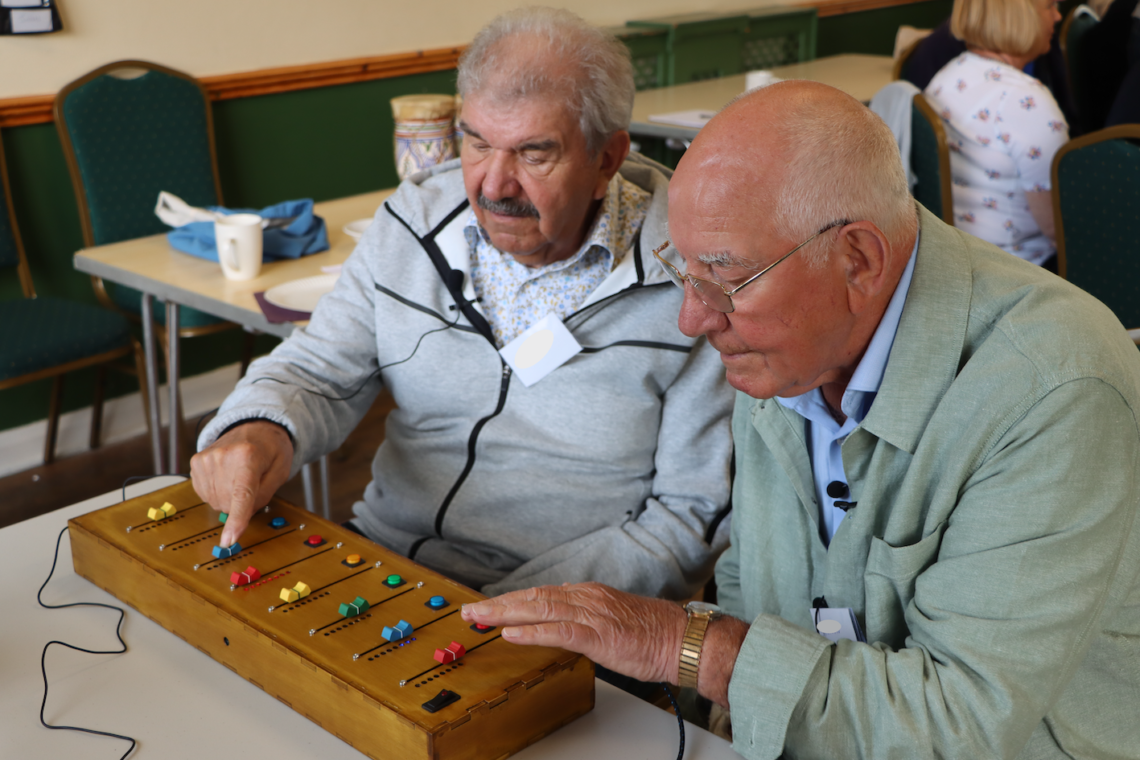
Image Credit: JoJanGles music group at Darnall Well Being in Sheffield © University of Sheffield Music, Dementia, Technology Research
Demographics, Settings & Referral Routes
Demographics: The project targets older adults (65+), care home residents, and working-age adults (26–64) living with dementia.
Settings: Activities are delivered in care homes, community health hubs, and neighbourhood health centres across Sheffield and the UK, with a focus on both group and individual engagement.
Referral Routes: Participants are engaged through partnerships with care homes, community organisations, and national activity providers.
Evaluation Methods
Evaluation is conducted through a mixed methods approach that involves quantitative and qualitative video analysis measures, as well as case study and narrative methods (structured storytelling, reflective journals, ethnographic notes). The project prioritises ethical co-production, informed consent, and safeguarding, with ongoing reflection on the impact and inclusivity of the technologies developed.
Participant & Stakeholder Feedback
Feedback from care partners and participants is highly positive. One care partner observed, “My observations of residents using the Sliderbox [in audio playground mode] have highlighted changes in perception, processing and understanding and the level of autonomy and coping strategies. It has also encouraged space sharing and interaction stimulating interest, choice making and adaptive techniques that have visibly enhanced feelings of empowerment and has offered a unique and valuable insight into their lived experience.“ - Fiona Pritchard – Music and Arts Partner, Colten Care
Such testimonials highlight the project’s impact on autonomy, engagement, and relational wellbeing.
Alignment with National Strategy & System Learning
The project aligns with national priorities for digital technology, health and care settings, and evidence and impact. It supports the integration of creative, digital, and participatory approaches into dementia care, contributing to system learning on how technology can enhance wellbeing, agency, and social connection for older adults.
Further information: https://sheffield.ac.uk/muses-mind-machine/research/technologies-ai/older-adult-wellbeing-music
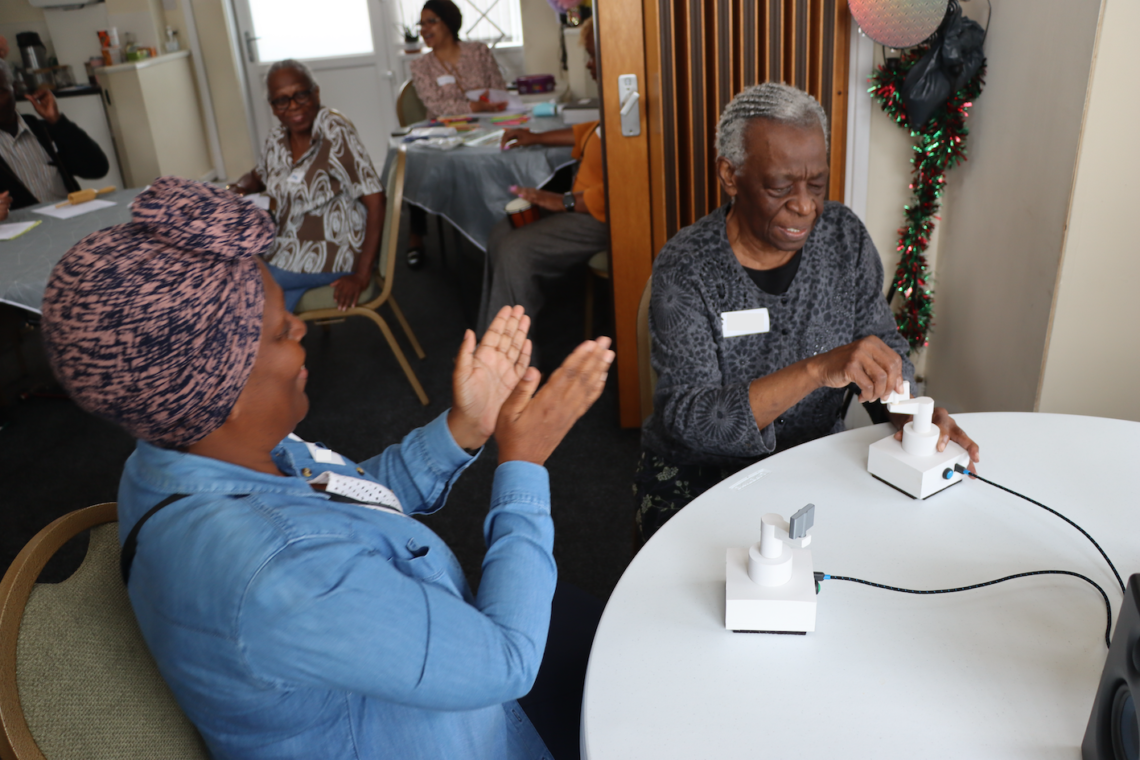
Image Credit: Sheffield Memory Hub © University of Sheffield Music, Dementia, Technology Research
This Case Study was submitted as part of a call out for Createch Case Studies, and demonstrates good practice in digital innovation within creative health.
Innovation & Digital Transformation
The project exemplifies digital innovation by co-developing new musical technologies—such as AI-enabled improvisation tools and tactile music devices—specifically designed for people living with dementia. These innovations spotlight user strengths, foster agency, and provide new opportunities for creative and social engagement, setting a precedent for digital transformation in dementia care. It demonstrates the transformative potential of co-designed digital tools in enhancing the wellbeing, agency, and social connection of older adults living with dementia. By centring lived experience, interdisciplinary collaboration, and digital innovation, the project offers a replicable model for creative health and technology integration in care settings.