
Place4Hope
Delivered by: Rosetta Life in collaboration with the Guildhall School of Music & Drama
In partnership with 20 international partners (listed below), including the Academy of Contemporary Music, the University of Plymouth, and Real Ideas Plymouth.
Funding: The Wellcome Trust and Arts Council England
“An opportunity to make links and forge bonds with other young people across the world, which has been life-changing for our students. They have learned that their voices matter, their creativity matters, and they have been able to collaborate in a shared digital artwork that transcends country borders." - Stakeholder quote
Overview
Place4Hope represents an innovative and sustained creative health initiative delivered by Rosetta Life. The programme originated in 2016 as a global online poetry exchange project designed for young people facing loss or serious illness, with the primary aim of developing empathy through literacy and building an inclusive global community. The initiative has demonstrated remarkable growth over its nine-year lifespan, expanding from an initial partnership of three organisations to a network of thirty international partners by 2025.
In 2022, the youth leadership group made a pivotal decision to refocus the programme on planetary health, climate justice, and the intersection of environmental and mental health concerns. This strategic shift was informed by compelling evidence, including a global survey of 10,000 young people which revealed that 72% of 16-25 year olds in the UK feel that "the future is frightening." The programme operates at a national scale with an online delivery model, enabling participation from young people across twenty countries.
The 2025 iteration of the programme, titled "Songs for a Burning World," represents the culmination of this evolved focus. This youth-led, co-created immersive opera is realised through 360° film, virtual reality (VR), and dome exhibition, developed through extended online workshops with young participants globally. The project mobilises operatic voice and sound-led extended reality (XR) practices to articulate climate experience as lived, situated, and plural, positioning youth and community members as authors and co-researchers rather than passive contributors to pre-existing frameworks.
Approaches & Methodology
Place4Hope employs a distinctive methodology grounded in five interconnected Pillars of Practice: Health, Science, Art, Climate Justice and Advocacy, and also young people and leadership The programme operates on the foundational belief that the climate crisis and planetary health constitute one indivisible healthcare emergency, embracing knowledge, inquiry, and evidence-based approaches whilst recognising art as an effective means to communicate climate justice and empower young people.
The programme's approach is characterised by an extensive range of values-based practices. These include co-design and co-production where participants shape the activity or service, co-creation involving shared creative making with communities, and participatory arts requiring active involvement in creative activities. The methodology also incorporates asset-based approaches that build on existing individual and community strengths, alongside lived experience leadership where people with lived experience drive design and delivery. The programme explicitly operates beyond the medical model, viewing health as shaped not just by biology but also by feelings, relationships, and context This is complemented by a commitment to holistic, whole-person care that considers multiple aspects of a person's experience, and a non-pathologising approach that supports wellbeing without labelling people as "ill" or "patients." Trauma-informed practice ensures emotional safety and sensitivity to past trauma, whilst cultural humility and equity recognises inequalities and adapts practice for inclusivity.
The convergence of XR and operatic storytelling offers a distinctive framework for climate communication. By prioritising voice, duration, and affect over explanation or didactic clarity, the project redistributes narrative authority away from expert discourse and towards collective listening. Operatic storytelling, understood as a system in which music carries time, psychology, and causality, enables multi-perspectival narratives that can hold contradiction, uncertainty, and uneven climate impacts without forcing resolution. The methodology has been refined through continuous analysis of outcomes. An independent evaluation commissioned in 2022 identified key principles of practice, with all partners agreeing that the project "created a unique kind of space for the social and emotional development of the young people involved." Child-centred and compassionate facilitation was identified as crucial, leading to tangible impacts on self-worth and efficacy.
Aims & Objectives
The programme's overarching vision is to empower young people worldwide to become agents of positive change through collaborative and creative initiatives that address pressing social and environmental challenges. Place4Hope aims to encourage and create long-lasting friendships among young leaders across the world, developing their agency through immersive storytelling, XR practices, advocacy, and policy engagement.
The mission is to provide an online platform for young individuals to express themselves, explore their creativity, and engage in meaningful dialogue and action around issues such as climate justice, social equity, and mental health. The programme seeks to foster a global community that embraces diversity, fosters empathy, and works together to create a more sustainable and equitable future for all.
Specific objectives include:
- Addressing the health inequalities that arise from climate injustice
- Recognising that young people's poor mental health as a result of climate change manifests in various ways including behavioural issues and emotional distress such as guilt and nostalgia for a healthier environment.
- Address the perception of a threatened future among youth, recognising that many young people believe their generation will bear the brunt of the environmental crisis, facing uncertain prospects for safety, economic stability, and planetary health.
The programme aims to:
- Integrate mental health resources into climate discussions and foster opportunities for meaningful action, ensuring young people feel equipped to face an uncertain future with strength and hope.
- To support young people who report feeling overwhelmed by the scale of climate issues and who often experience burnout from their efforts to engage in climate action.
Outcomes & Measured Impact
The programme has achieved remarkable outcomes, most notably maintaining 100% retention through the Summer School and the co-creation process .This exceptional retention rate demonstrates the programme's ability to engage and sustain participation among young people facing complex circumstances.
For example:
- Slow storytelling and polyphonic form: proved invaluable for moving beyond representation toward affective, embodied modalities that allow viewers to sit with the "messiness" of media, voice, and place across geographic and temporal registers.
- Songs for a Burning World: offers a prototype for decentralised, youth-led cultural production—redistributing attention, voice, and authority through sound-led immersion whilst inviting collective listening rather than singular experiences.
- The Summer School: co-designed by the youth leadership group, provides coaching for leadership development and opportunities for young leaders to drive local impact through dissemination of globally co-curated artwork.
The 2024 qualitative evaluation, including online surveys with partners and participants, identified several key themes of success: improved young people's wellbeing, connectedness across the globe, digital equity within the artworks, the balance of global connection and local impact, and a "developed sense of empathy and understanding." Other key themes linked to improved mental health outcomes included "sense of achievement," "agency," and "making a difference to climate action."
The independent evaluation from 2022 found that project leads unanimously felt that the initiative achieved positive outcomes and expressed a willingness to participate in future iterations. The evaluation identified that the project provided young participants with opportunities for self-expression, engaging with digital technologies and online platforms, learning new technologies, and connecting with peers from different contexts, fostering reflection on their own circumstances.
Achieving a sense of success and pride was identified as vital for participants' self-worth, with the collaborative nature of the project, driven by the creative process and the vision of the final piece, ensuring that these feelings were easily attainable. Specific impact examples include the Sunflower Hospice reporting that young people in their poetry club were more likely to adhere to medical treatments, indicating a sense of purpose and self-worth. Additionally, the project helped reengage girls who struggled to return to education after extended lockdowns.
Each young leader has the opportunity to shape a local event bringing together policy, artists, community partners, health sector, public health, and science, driving impact and change through local dissemination of globally co-curated artworks.
Key Enablers
The programme's success has been enabled by several critical factors
- Co-creation in XR became a practice of shared authorship across difference, with XR demanding that participants not only contribute ideas or stories but also shape the sensory, spatial, and affective dimensions of the work. Agency becomes multi-layered: young people influence narrative direction, visual composition, scale, and the temporal rhythm of the immersive experience. Each decision—where the viewer stands, what they can or cannot see, how sound surrounds them—embeds participants' perspectives materially into the environment. Rather than inviting audiences to become someone else, Songs for a Burning World invites them to "listen with," as witness to exchanges played out between the participants. This orientation reframes the XR encounter as a shared, accountable relation: audiences are welcomed into youth-led space, but the terms of attention are set by those who live the realities depicted.
- Sustainability is embedded as method as much as materials. Disseminating through domes and community venues reduces travel by moving files, not bodies, and embeds the work where climate action is locally negotiated. At the experiential level, spatial storying encourages audiences to "listen with more than [the] ear" and to stand accountable in place
- Shifts in leadership models, Co-production in XR has enabled devolved, peer-to-peer frameworks where young participants are not recipients of a project but its drivers—curating workshops, designing scenes, mentoring others, and shaping ethical protocols around representation and consent. The dome exhibition format allowed the conversion of choral, spatialised sound into shared civic listening at scale
- International online exchange aspect was identified as a major motivator for young people, helping them feel connected rather than isolated. Deep creative exchanges with partner sites offered unique opportunities for self-reflection and reassessment of one's place in the world. For children in poorer contexts, seeing that others also face challenges and feeling seen and heard was crucial for their sense of self-worth and ambition
Key Challenges/Barriers
- Co-creation: despite efforts to ensure devolved authority and programmes led by the lived experience of young leaders, digital engagement remains more transactional and less dialogic than face-to-face interaction. Multiple voices and perspectives must be harnessed into a single global artwork, and regardless of how many drafts are shared with young people, there is inevitably an editor's choice at work in the digital edits.
- Health Equity: presents ongoing challenges, as it is difficult for young people in diverse contexts to have equity over the dissemination events. The programme needs to raise funds to redress the imbalances of homelessness and displacement, illness, poverty, and conflict that affect participants in different locations.
- Financial Sustainability: represents a persistent barrier. It is very hard to fundraise for international projects that are not frontline services, and the complex and fragile partnerships mean that projects are sustained on low resources. This resource constraint means that deadlines are often missed, which is frustrating for the young people involved.
Demographics, Settings & Referral Routes
Demographics: Primary focus on children and young people's mental health. Specific target groups include young adults (18–25), early years (0–5), children (6–12), and adolescents (13–17), looked-after children and care leavers, carers (unpaid), people experiencing homelessness, people living in deprived areas (IMD), people with physical disabilities, and migrants, refugees, and asylum seekers.
Settings: The programme operates across multiple settings including community health hubs and Neighbourhood Health Centres, schools, nurseries, colleges, and universities, community centres, homeless shelters and hostels, online platforms.
Referral Routes: Participants are recruited through two primary pathways: via Primary Care (including Social Prescribing, GP, Health and Wellbeing Coach, Practice Nurse, etc.) and via Charities and Community Organisations. These dual pathways ensure that the programme reaches young people through both formal healthcare systems and community-based networks, maximising accessibility for diverse populations. The international partnership model, involving 20 international partners across twenty countries, provides multiple entry points for young people to engage with the programme. Partner organisations include educational institutions such as the Guildhall School of Music and Drama and the University of Plymouth, as well as community organisations like Real Ideas Plymouth.
Evaluation Methods
The programme employs participatory and co-produced evaluation methods where participants are actively involved in designing or leading the evaluation. This is complemented by case study and narrative evaluation approaches including structured storytelling, reflective journals, and ethnographic notes. The programme demonstrates strong commitment to arts-based evaluation and research, using creative activities as tools to evidence impact. Additionally, practice-based research is employed, where creative practitioners systematically reflect on and document their own practice to generate new knowledge.
Ethical considerations are embedded throughout the programme's approach. The commitment to trauma-informed practice ensures emotional safety and sensitivity to past trauma, whilst cultural humility and equity recognises inequalities and adapts practice for inclusivity. The programme has confirmed that where media includes images of participants, informed consent has been received. The co-production approach in XR enables young participants to shape ethical protocols around representation and consent, ensuring that ethical considerations are not imposed externally but developed collaboratively with those whose stories are being told.
Participant & Stakeholder Feedback
Participant feedback demonstrates the profound impact of the programme.
Esmé, 15, from England, reflected on the inclusive and collaborative nature of the summer school: "Everyone was so full of incredible ideas, and inclusive – no matter who I was put with to discuss ideas with each day, it was always fascinating! The film really brings out diversity and voices of everyone."
Noor, 16, from Palestine, highlighted how her personal experiences during the difficult events in Gaza have intensified her awareness of environmental damage: "[the summer school's] importance has increased for me after what I experienced and saw of the difficult events in Gaza. Certainly, all the toxic materials that have been dropped on us have a huge and terrible impact on the atmosphere, water, and the soil."
Alignment with National Strategy & System Learning
The programme's approach to healthcare innovation involves trying out new ideas and creative approaches in health and care, whilst digital innovation encompasses apps, online platforms, and VR/AR for health and wellbeing. The commitment to sustainable cultural investment addresses innovations in achieving long-term, stable funding for creativity in health systems.
The programme also contributes to knowledge exchange by sharing learning across health, culture, and community sectors. The community-led practice approach supports grassroots, self-organised creative health activities, whilst the focus on service redesign and pathway innovation demonstrates potential for embedding creative health into clinical or care systems.
The targeted system and service workstreams include digital health, health inequalities and Population Health Management, and public health and prevention, and aligns with the NCCH National Toolkit themes around Digital Technology, Leadership, Strategy and Governance, and Health Inequalities. This alignment demonstrates the programme's relevance to national priorities in creative health and its potential to contribute to system-level learning and transformation.
Further Information: https://rosettalife.org/current-programmes/place4hope/
Partners included:
- Yalan Dünya Films, Turkey
- SNFCC, Greece
- Vladimir Library, Romania
- Bartholomew School, UK
- Gerude, an educational program implemented by the NGO Ger Urgoo, aimed at uniting the creative youth of the 21st century, Mongolia
- Nay Win School of English Language, Myanmar
- Al Farah Choir, Syria
- Fundación ABLE / Colegio La Fontaine, Colombia
- Dream A Difference, India
- CholPori // HerStory Foundation, Bangladesh
- Shurjodoy youth society, Rohinga Refugee Camp, Bangladesh
Sunflower Children's Hospice, Bloemfontein, South Africa - National Association of Social Workers of Uganda
- Obafemi Awolowo University, Nigeria
- Prep B UNRWA School, Occupied Territories of Palestine
- Breadalbane School, Scotland
Mental Health Fellowship and Mental Health Tribe, Nigeria
North Carolina Museum of Art, USA North Carolina
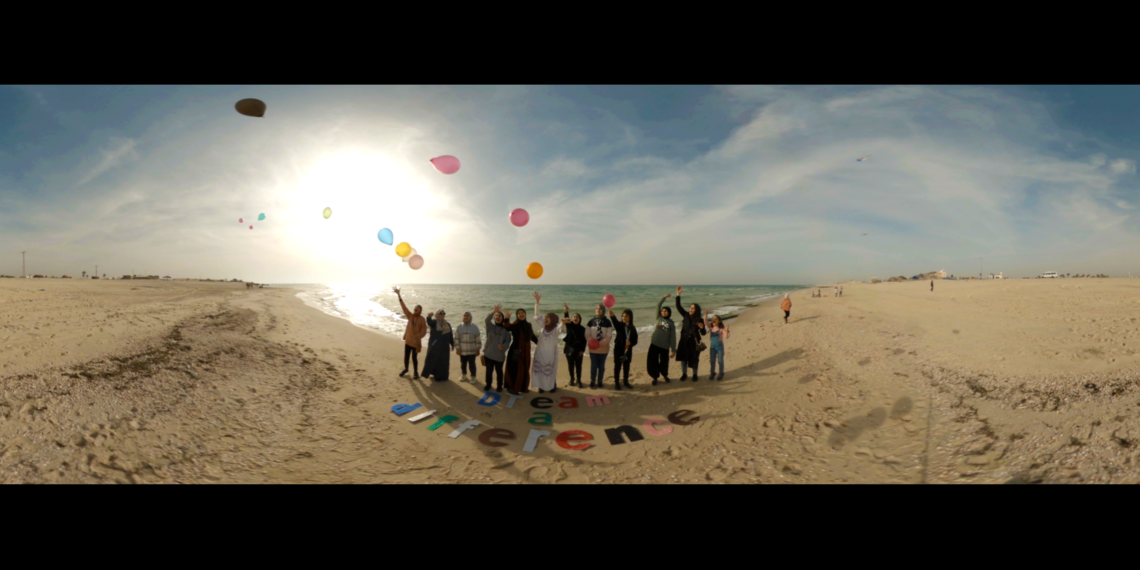
Image Credit: Gaza Balloons © Rosetta life
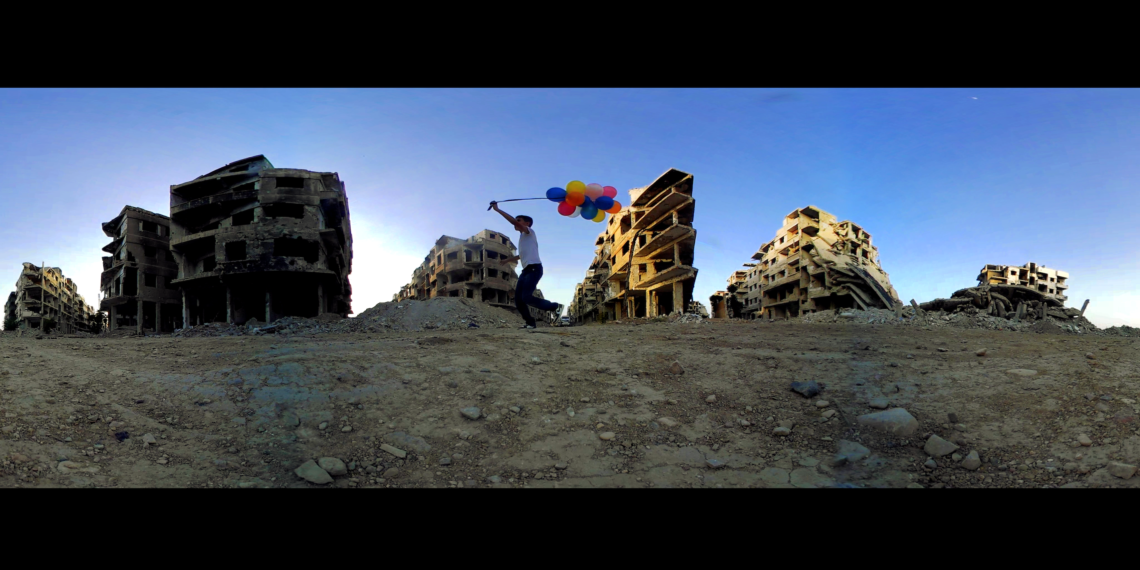
Image Credit: Eynsham Alfarah © Rosetta life
This Case Study was submitted as part of a call out for Createch Case Studies, and demonstrates good practice in digital innovation within creative health.
Innovation & Digital Transformation
Place4Hope represents a pioneering model of creative health practice that integrates digital innovation, youth leadership, and climate justice within a mental health framework. The programme's evolution from a poetry exchange project to a sophisticated XR-based immersive opera demonstrates adaptive programming that centres young people's voices. The effectiveness of XR lies not in increasing perceptual intensity, but in structuring conditions under which voices are heard and held in cultural production oriented toward the collective organisation of attention, care, and responsibility.
This digital innovation model extends beyond technology to encompass new approaches to data collection, analysis, and visualisation that better fit artistic practice, improve insights, reduce participant fatigue, or present more creatively.
Place4Hope demonstrates that creative health interventions can operate at scale across international boundaries whilst maintaining meaningful local impact, and that thoughtfully deployed digital technologies can support genuine human connection and collective action.