
Soul Paint
Delivered/created by Sarah Ticho (Hatsumi) and Niki Smit (Monobanda)
In parternship with StoryFutures, Royal Holloway University, Creative Giants, The Campaign Against Living Miserably (CALM), Eastern City BID
Funding: NL Film Fonds, Creative Industries NL, StoryFutures (as part of the Connect XR R&D programme), Unity for Humanity, Creative XR
Overview
Soul Paint is a multi-award-winning virtual reality (VR) experience created by Sarah Ticho (Hatsumi) and Niki Smit (Monobanda), designed to help individuals explore their inner emotional and physical worlds through embodied art-making. Narrated by Rosario Dawson and backed by behavioural scientists and healthcare experts, Soul Paint invites participants to visualise sensations and emotions on a virtual 3D body, creating personal artworks that represent their inner experience. The experience is delivered in diverse settings, including libraries, colleges, festivals, art exhibitions, healthcare institutions, and is being developed for home and clinical use. Soul Paint aims to bridge arts, technology, and wellbeing, offering a gentle, inclusive space for reflection and emotional regulation.
Approaches & Methodology
Soul Paint combines 3D drawing, playful embodied interaction, and guided self-reflection, encouraging participants to answer the question: “Where are you feeling?” The experience uses the traditional arts-therapy technique of body-mapping, enhanced by immersive VR technology, to foster interoceptive awareness and emotional processing. Participants are guided through a journey of self-exploration, drawing on a virtual body, stepping into their creation, and sharing or witnessing the expressions of others. The methodology is trauma-informed, holistic, and non-pathologising, supporting emotional safety and inclusivity. Research and delivery have included pilots in libraries, colleges, and exhibitions, with ongoing adaptation and validation for clinical and home settings.
Aims & Objectives
Soul Paint’s aims are to:
- Encourage embodied insight and awareness of how feelings manifest in the body.
- Support reflection and transformation of emotional experiences.
- Enable creative, non-verbal expression and communication of feelings.
- Foster empathy and social connectedness through shared experience.
Objectives include integrating Soul Paint into community, educational, and clinical pathways, supporting emotional check-ins, reflective practice, and non-verbal therapeutic engagement.
Outcomes & Measured Impact
Research and evaluation have demonstrated significant positive outcomes:
- In the StoryFutures Connect XR study (n=131), 61% of participants felt negative or neutral before the experience, while 76% felt positive afterwards—a 95% increase in positive feelings. Over 80% said they would like to repeat the experience.
- The Observatory Study (n=39), participants rated enjoyment at 4.55/5 and user-friendliness at 4.18/5. Reported benefits included increased interoceptive awareness, emotional release, calm, inspiration, and empathy.
- Qualitative feedback highlights Soul Paint as a useful tool for emotional check-ins, wellbeing reflection, and creative inspiration, with participants noting enhanced awareness of bodily sensations and a greater sense of connection to others.
Key Enablers
- Strong partnerships with research, healthcare, and cultural organisations (e.g., StoryFutures, Royal Holloway University, Creative Giants, CALM).
- Funding from NL Film Fonds, Creative Industries NL, StoryFutures, Unity for Humanity, and Creative XR.
- Interdisciplinary collaboration between artists, technologists, and behavioural scientists.
- Ongoing research and evaluation, including participatory and co-produced methods.
Key Challenges/Barriers
- Securing ongoing funding and partnerships to support development and distribution.
- Adapting the experience for different environments, including privacy and onboarding for first-time users.
- Navigating policy and regulatory frameworks for adoption in health and care systems.
- Ensuring accessibility and clear guidance for diverse user groups.
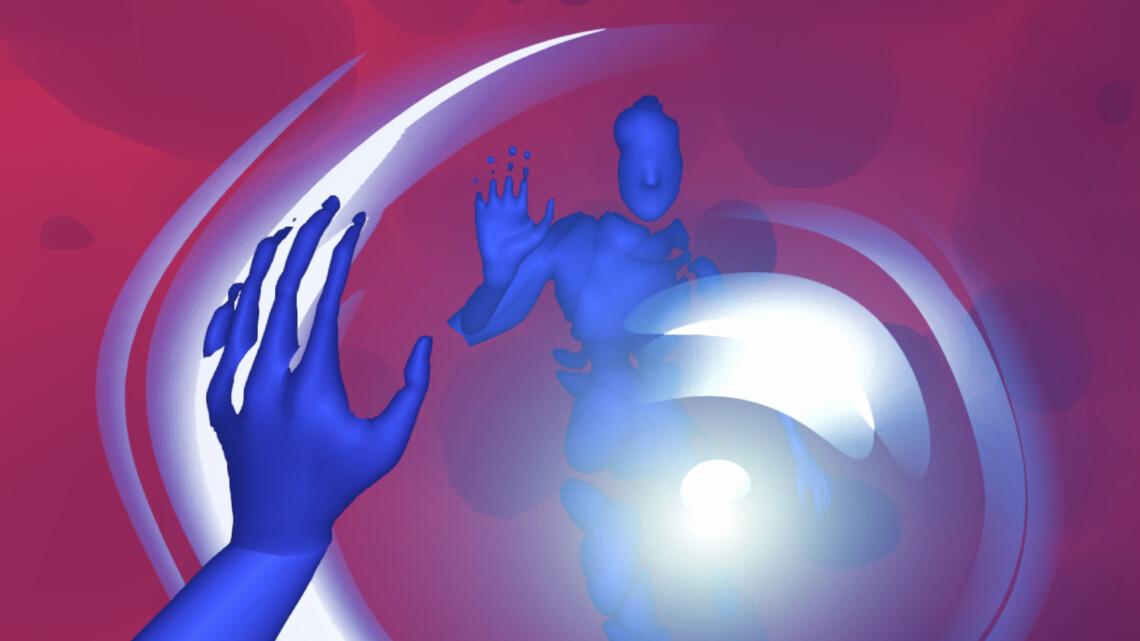
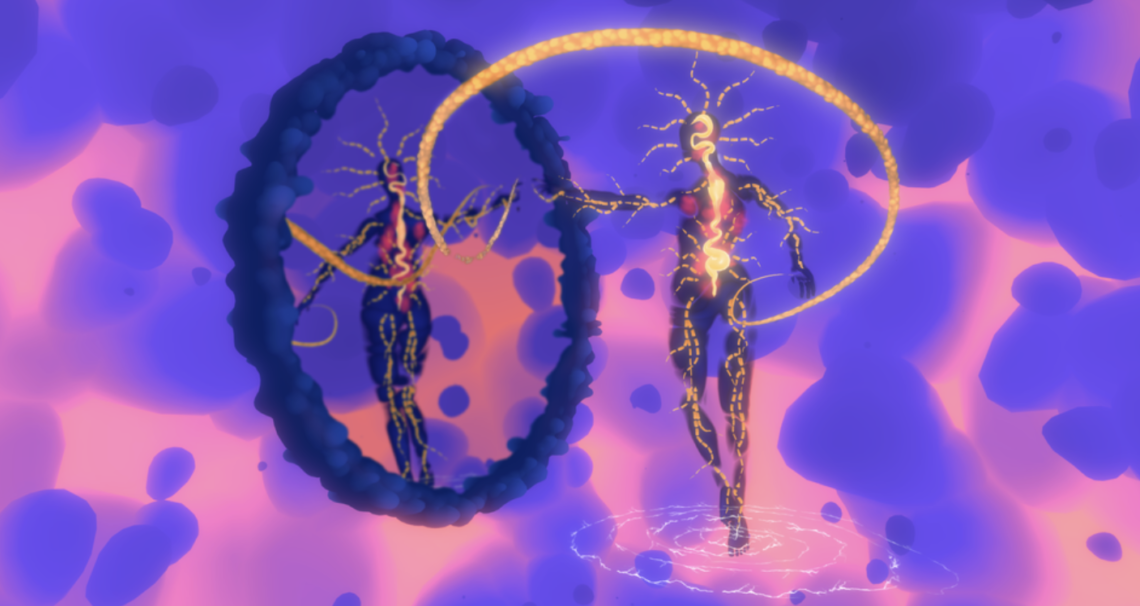
In game shots © Soul Paint
Demographics, Settings & Referral Routes
Demographics: Soul Paint serves a wide demographic: early years, children, adolescents, young adults, working-age adults, older adults, women, men, gender and sexual minorities, ethnic minorities, neurodivergent people, people with disabilities, those living in deprived areas, and more.
Settings: Potential areas of implementation include: acute hospitals, mental health hospitals, primary care, community health hubs, care homes, hospices, schools, festivals, prisons, youth clubs, workplaces, libraries, museums, theatres, community centres, rehabilitation centres, homes, and public venues.
Referral Routes: Participants are recruited via self-referral, primary care (social prescribing, GPs, health coaches), public health campaigns, word of mouth, social media, taster days, education and specialist pathways, and cultural venues.
Evaluation Methods
Evaluation methods include anecdotal feedback, routine monitoring, validated outcome measures (e.g., WEMWBS, EQ-5D, PHQ-9, GAD-7), participatory and co-produced evaluation, case study and narrative evaluation, market research, formal internal evaluation, and independent research. All research is conducted with informed consent and attention to participant privacy and comfort.
Participant & Stakeholder Feedback
Feedback is overwhelmingly positive, with participants describing Soul Paint as calming, inspiring, and insightful. Stand-out quotes highlight increased interoceptive awareness, emotional processing, empathy, and creative inspiration. Including:
“That the mind, memories and the body are connected.”
“Identified the pain I'm carrying, often subconsciously, like a limp that I forget I have as I'm so used to it but sometimes others notice and ask about it.”
“That I am not alone and my thoughts are not me.”
“It was really insightful and exciting, and made me think this should be more readily available, it was really user friendly and I'm fairly technophobic.”
Participants value the immersive atmosphere, emotional release, and the opportunity to hear others’ stories, with suggestions for more privacy and clearer onboarding in future installations.
Alignment with National Strategy and System Learning
Soul Paint aligns with NHS and national priorities around prevention, mental health, social prescribing, digital inclusion, and health inequalities. It offers a replicable, evidence-based intervention for emotional regulation, embodiment, and community connection, supporting innovation in health and care systems and contributing to research and evaluation frameworks for XR in creative health.
Further information: www.soulpaint.co
- Audience Insight & Toolkit
- Connect XR Toolkit - Full report
This Case Study was submitted as part of a call out for Createch Case Studies, and demonstrates good practice in digital innovation within creative health.
Innovation & Digital Transformation
Soul Paint demonstrates how immersive storytelling and digital embodiment can transform emotional awareness and communication. By combining art, movement, and technology, it creates a gentle, inclusive space for reflection and connection, supporting wellbeing at both individual and systemic levels and offering a replicable model for creative health innovation.
It exemplifies digital innovation by merging VR, art therapy, and behavioural science to create a scalable, immersive wellbeing intervention. The experience leverages digital arts, body-mapping, and interactive storytelling to support emotional health, with ongoing research and development for home, educational, and clinical use.