
The Heart of the Matter
Delivered by: Conceived by artist Sofie Layton and bioengineer Giovanni Biglino, and developed with health psychologist Jo Wray.
Funding: Wellcome Trust
Overview
The Heart of the Matter is an ongoing, nationally and internationally recognised creative health programme that explores the lived experience of heart disease through interdisciplinary collaboration. Conceived by artist Sofie Layton and bioengineer Giovanni Biglino, and developed with health psychologist Jo Wray, the project brings together patients, families, clinicians, scientists, and artists to examine the heart both emotionally and metaphorically. Since its inception in 2015–16 at Great Ormond Street Hospital, the programme has grown into a 10-year body of work, including workshops, exhibitions, and digital engagement, with over 100,000 visitors in the UK and international presentations.
Approaches & Methodology
The programme is rooted in co-design, co-production, and participatory arts, with patients and the public actively shaping the creative process. Workshops with patients of all ages, families, clinicians, and artists generate conversations and stories that inspire a diverse range of artworks. These include medical 3D printing, topographical maps, digital animation, printed textiles, sound installations, and sculpture. The methodology values lived experience leadership, interdisciplinary practice, and the integration of scientific and artistic methods. The project is supported by a wide team and a robust programme of patient and public involvement and engagement.
Aims & Objectives
The primary aim is to offer insight into the beauty, fragility, and resilience of the heart, as experienced by patients, families, and clinicians. Objectives include:
- Using creative and scientific methods to represent the lived experience of heart disease.
- Fostering empathy, understanding, and dialogue between patients, clinicians, and the public.
- Advancing interdisciplinary collaboration and co-created work in health and care.
- Extending the programme to new conditions and technologies, such as Takotsubo cardiomyopathy and 3D modelling.
Outcomes & Measured Impact
The Heart of the Matter has reached over 100,000 visitors in the UK and internationally, with a digital reach of 2 million for the 2018 exhibition. Hundreds of patients of different ages and heart conditions have participated in the programme, contributing to research and creative outputs. The project has inspired a range of multimedia works, including a video piece with musician Tara Kamangar and new collaborations on 'broken heart syndrome.' Evaluation includes anecdotal feedback, routine monitoring, validated outcome measures, narrative evaluation, and independent research, with many participant quotes available in published articles.
Key Enablers
- Strong interdisciplinary collaboration between artists, clinicians, scientists, and patients.
- Robust patient and public involvement and engagement.
- Support from major funders, including the Wellcome Trust, Arts Council England, and hospital charities.
- Use of digital technology, 3D modelling, and creative storytelling to engage diverse audiences.
- Practice-based and arts-based research underpinning the programme’s development.
Key Challenges/Barriers
- Sustaining a large, multi-site, and interdisciplinary programme over a decade.
- Ensuring meaningful co-production and engagement across diverse patient groups.
- Navigating the complexities of integrating scientific, clinical, and artistic perspectives.
- Adapting to new technologies and expanding the programme to new conditions and contexts.
Demographics, Settings & Referral Routes
Demographics: The programme serves early years, children, adolescents, young adults, working-age adults, older adults, women, men, and people with physical and hidden disabilities.
Settings: Activities take place in acute hospitals, schools, universities, museums, galleries, and online, with a national and international reach.
Referral Routes: Participants are recruited via secondary care professionals (Allied Health Professionals, Occupational Therapists, Rehabilitation, Community Mental Health Teams, Psychiatrists), and through charities and community organisations. The programme is also promoted through exhibitions, digital platforms, and public engagement events.
Evaluation Methods
Evaluation methods include anecdotal feedback, routine monitoring data, validated outcome measures (e.g., WEMWBS, EQ-5D, PHQ-9, GAD-7), case study and narrative evaluation, formal internal evaluation, and independent research. The programme is committed to ethical engagement, safeguarding, and participant consent, with published articles documenting evaluation findings.
Participant & Stakeholder Feedback
Feedback from participants, clinicians, and the public has been overwhelmingly positive, with many describing the project as beautiful, evocative, and transformative. Quotes and evaluation findings are available in published articles, highlighting the programme’s impact on empathy, understanding, and engagement.
Alignment with National Strategy & System Learning
The Heart of the Matter aligns with national strategies for digital technology, evidence and impact, and interdisciplinary practice. The programme supports system learning by integrating creative health into clinical and community settings, advancing digital innovation, and providing evidence for the i
mpact of arts in health.
Further Information: insidetheheart.org
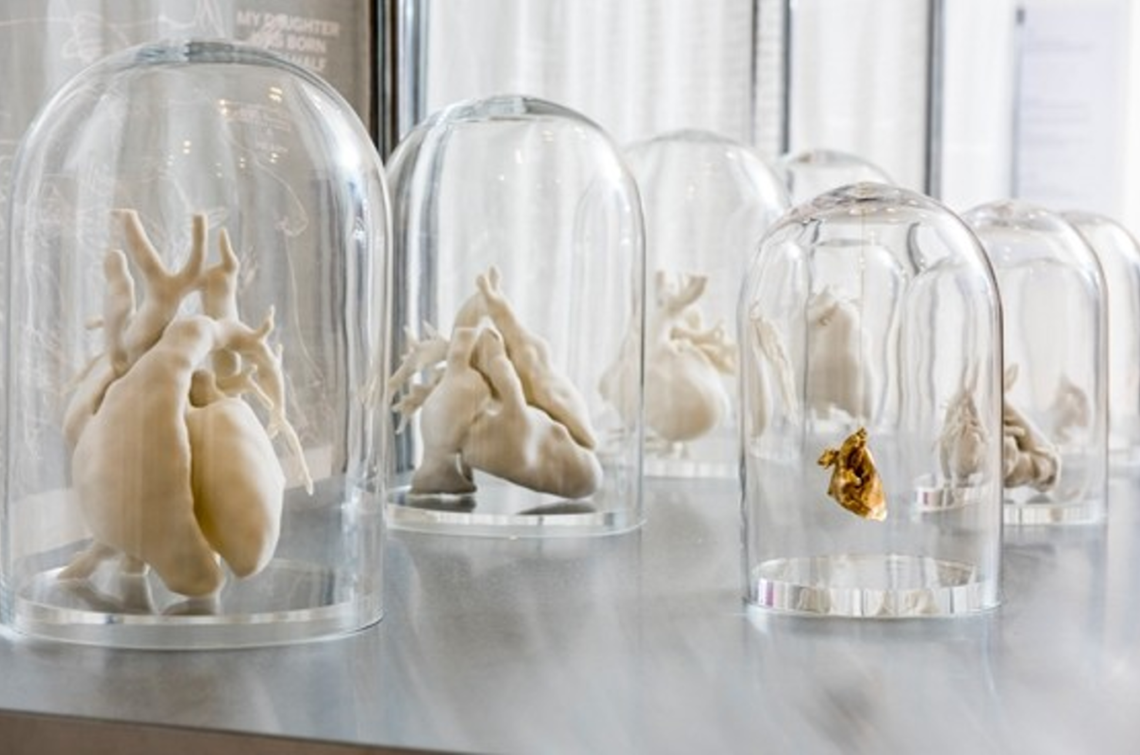
Image Credit © Sofie Layton, Making the Invisible Visible, multimedia installation including 3D printed models (2016-18)
This Case Study was submitted as part of a call out for Createch Case Studies, and demonstrates good practice in digital innovation within creative health.
Innovation & Digital Transformation
The Heart of the Matter demonstrates the power of creative, co-produced, and interdisciplinary approaches to exploring lived experience in health. By integrating art, science, and technology, the programme offers a replicable model for engaging patients, clinicians, and the public, advancing digital innovation, and supporting system learning in creative health. The programme exemplifies innovation through its use of medical 3D printing, digital animation, VR, mixed reality, and multimedia storytelling. It demonstrates how digital and creative technologies can be harnessed to represent lived experience, foster dialogue, and advance interdisciplinary research in health and care.