
VR-Melody
Delivered by The Centre for Trials Research, Cardiff University and VR industry partner
In partnership with Universal Music Group, AI innovation consultants, voluntary sector housing and
clinical partners.
Funding: Innovate UK Mindset Extended Reality (XR) for Digital Mental Health
Overview
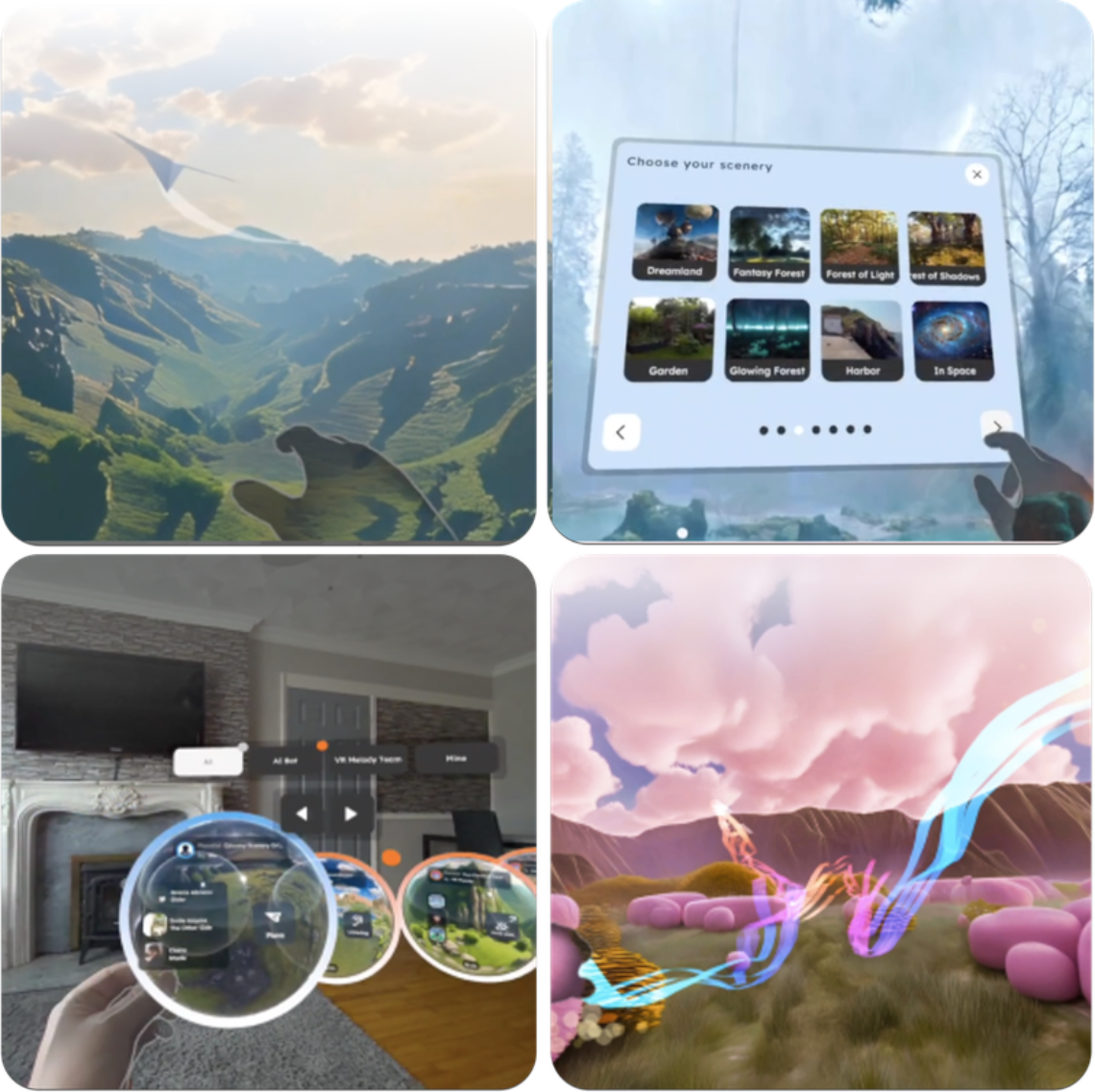
VR-Melody is a time-limited, co-produced digital mental health intervention developed by a multidisciplinary team; Dr Kim Smallman, Research Lead, Cardiff University, VR industry experts Mr Kevin Moss, Project Lead and Mr Arron Burch, Lead Developer, in collaboration with; Universal Music Group, Robin Moore, AI Innovation Consultant, Shwsh, Dr Jamie Smith and Mr Mike Rance, Hafod Housing, Dr Simon Riches, Clinical Psychologist, King’s College London. The project is based in South Wales, UK, and aims to support adults experiencing symptoms of anxiety and to build mental resilience through a personalised Virtual Reality (VR) solution. The intervention leverages artificial intelligence (AI) and music to create immersive, home-based therapeutic experiences, with a focus on self-management and preventive mental health care.
Approaches & Methodology
The programme is grounded in co-design and co-production, with people with lived experience shaping the activity and intervention content. The development process followed Medical Research Council guidance and the Double-Diamond user-centric approach, combining industry and academic expertise. The methodology included protocolised co-production activities, user-testing, and technology evaluation, with analysis based on the Unified Theory of Acceptance and Use of Technology. The intervention was developed in three phases: identifying priorities and requirements, prototyping and refining the VR app, and user-testing at home.
Aims & Objectives
The primary aim was to co-create a personalised VR solution for adults experiencing
symptoms of anxiety, exploring how AI and music can enhance personalisation and engagement. Objectives included:
- Determining priorities for a personalised VR therapeutic solution and key intervention components.
- Developing and refining a co-produced, home-based VR intervention.
- User-testing to identify barriers and facilitators to engagement and use at home.
- Mapping therapeutic content to mechanisms of action and developing user guidance.
- Understanding user requirements for acceptability and adoption of immersive therapeutic solutions.
Outcomes & Measured Impact
The project recruited 34 adults for co-production activities and 38 for user-testing at home.
Key outcomes included:
- High engagement: 94% of participants accessed five or more sessions during user-testing.
- Positive feedback: 79% strongly agreed they liked using Melody; 76% found it fun; 55% would find it useful for maintaining mental wellbeing; 56% agreed it could help self-manage anxiety.
- Reported benefits: improved sleep, mood regulation, reduced stress and anxiety, dedicated self-care time, and transferability of skills to real-life settings.
- The intervention logic model and user feedback informed refinements for future randomised controlled trials.
Key Enablers
- Multidisciplinary team and co-led industry-academic collaboration.
- Protocolised co-production and user-testing, ensuring lived experience leadership.
- Ongoing feedback and iterative development.
- Strong partnerships with Universal Music Group, AI consultants, housing, clinical, and research partners.
- Funding from Innovate UK Mindset Extended Reality (XR) for Digital Mental Health.
Key Challenges/Barriers
- Managing different agendas and expectations within the collaboration.
- Balancing creative development with the need for a robust evidence base.
- Navigating the tension between creativity and therapeutic benefit.
- Ensuring the intervention is both engaging and clinically effective.
Demographics, Settings & Referral Routes
Demographics: VR-Melody targets young adults (18–25) and working-age adults (26–64) experiencing symptoms of anxiety, with a focus on adult mental health and public health prevention.
Settings: The intervention is designed for home use, supporting self-management and preventive care.
Referral Routes: Participants were recruited via self-referral, voluntary sector social
care and community organisations, research trial advertisements, and social media campaigns. This multi-channel approach ensured a diverse participant pool and broad community engagement.
Evaluation Methods
The evaluation was undertaken by the Centre for Trials Research, and included online surveys, focus groups, in-depth interviews, and usage data from VR headsets. The analysis framework utilised domains from the Unified Theory of Acceptance and Use of Technology, and the project adhered to ethical standards for participant consent and safeguarding.
Participant & Stakeholder Feedback
Participants described VR-Melody as a “good thing to wind down to help you relax,” “helped transport me and lift my mood,” and “helped with my sleeping.” The ability to personalise the experience and the sense of having “your own little world” were highly valued. Stakeholders noted the project’s innovative approach and its potential for long-term mental health improvement.
"Yeah, I think it helped me a lot, you know, to be able to listen to the music and sort of look at the scenery. It was, yeah, an added bonus."
"Just that it’s a really good, a really good thing to wind down to help you relax and I think long term I think it would help improve your mental health definitely."
Alignment with National Strategy & System Learning
VR-Melody aligns with national strategies for digital technology, evidence and impact, and self-management in mental health. The project supports preventive and early intervention approaches, digital innovation, and the integration of creative health solutions into mainstream care. The intervention is positioned for future scaling and system learning through randomised controlled trials.
Further information: https://www.cardiff.ac.uk/centre-for-trials-research/research/studies-and-trials/view/vr-melody
Short videos
Walk through: https://vimeo.com/1088311087
Overview: https://vimeo.com/1055625151/0cea9fbe2e
AI Consultant, Robin: https://vimeo.com/1074215689/af57656f4b
Research Participant, Jake: https://vimeo.com/1055185351/19b046750a
Research Lead, Kim: https://vimeo.com/1057776522/9b7afac52a
This Case Study was submitted as part of a call out for Createch Case Studies, and demonstrates good practice in digital innovation within creative health.
Innovation & Digital Transformation
VR-Melody exemplifies digital innovation by integrating AI, music, and VR to create a personalised, immersive mental health intervention. It demonstrates the potential of co-produced, technology-driven interventions to support mental wellbeing and anxiety self-management. By centring lived experience, multidisciplinary collaboration, and digital innovation, the project offers a scalable, evidence-informed model for preventive mental health care and system transformation. The project’s co-production model, user-centric design, and iterative development process set a precedent for future digital mental health solutions, supporting both creativity and clinical effectiveness.