
Virtual Reality (VR) Use During Intrauterine Device (IUD) Procedures: A London Experience
Delivered by: John Hunter Clinic, Chelsea and Westminster Hospital and CW+ charity.
Funding: CW+ charity
Overview
This pilot project, led by Sara Day, Jess Collins, and Nicole Alexiuk, at Chelsea and Westminster Hospital, and CW+ charity, evaluated the use of virtual reality (VR) as a non-pharmacological adjunct to improve the patient experience and reduce anxiety during intrauterine device (IUD) procedures. The initiative represents the largest single-site dataset and the first UK sexual health centre to introduce VR into clinical practice, aiming to improve patient experience and satisfaction in a busy NHS setting. The project was piloted at the John Hunter Clinic, with VR offered to all patients attending routine, complex-referral, or training IUD clinics. The intervention did not prolong appointment times and is now embedded in routine practice, offering a scalable model for digital innovation in NHS care.
Approaches & Methodology
VR headsets were offered to 235 patients between November 2024 and November 2025. Both patients and clinicians completed questionnaires assessing acceptability, pain and anxiety scores, overall satisfaction, and impact of VR on experience. Appointment durations were compared between the pre-VR and VR periods. The VR content included audiovisual experiences, breathing instructions, and distraction techniques, with staff trained to set up and support the use of VR during procedures. The approach was holistic, trauma-informed, and embedded within routine clinical workflows, with a focus on rapid, portable setup and minimal disruption to appointment times.
Aims & Objectives
The primary aim was to evaluate the feasibility, acceptability, and impact of VR on anxiety, and overall experience during IUD procedures.
Objectives included:
- Assessing patient and clinician perceptions of VR
- Measuring changes in anxiety using VR
- Comparing experience with VR to previous procedures
- Evaluating the effect of VR on appointment duration and workflow.
- Identifying facilitators and barriers to VR uptake and implementation.
Outcomes & Measured Impact
Of 235 patients offered VR, 177 (75%) accepted, and this evaluation represents the largest single-site dataset and the first UK sexual health centre to introduce VR into clinical practice, strengthening the reliability and applicability of findings compared to previous smaller-scale, non-NHS trials. Among VR users, 87% reported reduced anxiety (33% “significantly,” 54% “somewhat”), and 86% of those with prior IUD experience found VR superior to previous procedures. 93% would use VR again, and 96% would recommend it. Overall, 87% rated VR 4/5 or 5/5 stars.
Survey feedback from clinicians was received from 9/13 (69%) IUD fitters and 6/6 (100%) chaperones. All respondents felt VR was helpful in clinic, reduced patient anxiety, improved patient care and generated increased positive patient feedback. Most perceived that VR helped them perform their job better (80%), rated it highly (80%) and all endorsed continued use. Respondents reported VR increased chaperone availability (67%) and generated the same (53%) or fewer (40%) staff–patient interactions.
Clinician feedback was therefore positive: all respondents felt VR was helpful, reduced patient anxiety, improved care, and increased positive feedback. Appointment durations remained comparable between pre-VR and VR periods, demonstrating that VR could be integrated without prolonging procedures. The evaluation showed VR was feasible, well-accepted, and improved patient and clinician experience.
Overall the service evaluation demonstrated that use of VR as a non-pharmacological adjunct during IUD procedures was well accepted by clinicians and patients. Most patients reported that VR decreased their anxiety, were willing to reuse VR and recommend it and the majority reported a superior experience compared to previous procedures. These outcomes were achieved without significant prolongation of the appointment time.
Key Enablers
- High baseline patient anxiety, making VR a welcome intervention.
- Chaperones offering and setting up VR, with quick and easy setup.
- Portability and availability of multiple headsets.
- Staff training and troubleshooting tips.
- Content options including breathing exercises and calming scenes.
- Reassurance that patients accepting VR could still communicate with clinicians and remove the headset at any time.
Key Challenges/Barriers
- Claustrophobia and motion sickness for some users.
- Anxiety about being distracted or sensory overload.
- Technical issues: device charging, image quality, headset comfort (especially for spectacle wearers or those with certain hairstyles).
- Chaperone shortages and logistical barriers.
- Ensuring content duration matched procedure length and volume was appropriate.
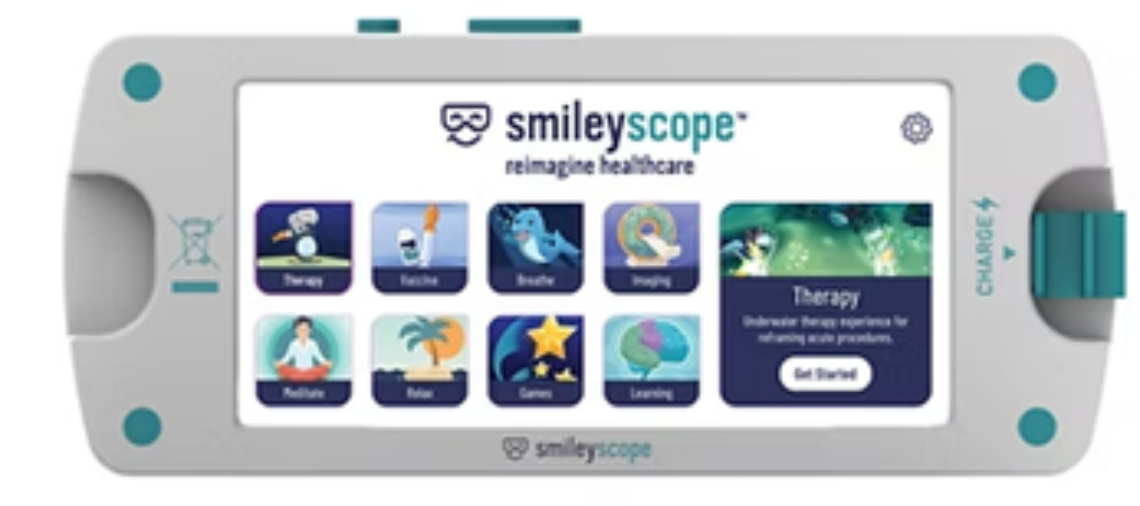
Image: VR choices
Demographics, Settings & Referral Routes
Demographics: The project targeted young adults (18–25), and working-age adults (26–64) undergoing IUD procedures.
Settings: The intervention can be delivered in acute hospitals, primary care (GP surgeries, health centres), and community health hubs, focusing on sexual and reproductive health and menopause/gynaecological health.
Referral Routes: : Participants were recruited via self-referral and/or GP referral to secondary care sexual health professionals The offer of VR was embedded into routine clinical pathways for IUD procedures.
Evaluation Methods
Evaluation included routine monitoring data (participant numbers, demographics, attendances and consultation durations. Both patients and clinicians provided feedback through structured questionnaires, and the project adhered to ethical standards for consent and safeguarding.
The evaluation demonstrated that VR is a feasible, acceptable, and effective adjunct for reducing anxiety during IUD procedures, with high uptake and satisfaction among patients and clinicians.
Participant & Stakeholder Feedback
Patient feedback was overwhelmingly positive, with comments highlighting the value of distraction, relaxation, and reduced anxiety. Many noted that VR helped them focus on breathing, masked anxiety triggers, and provided a superior experience compared to previous procedures. Clinicians reported that VR improved patient care, reduced anxiety, and made their roles easier.
Comments included:
- Good to take away the hospital environment and to not think about what instrument is being used next
- Loved it. Audiovisual distracted me. I get anxious when I see the equipment so having headset stopped this from triggering my anxiety
- This was a good distraction and soothing. It was good to not see instruments but was still guided as to what was happening which was helpful
- This definitely should be offered. Helped me to distract. Also allowed an element of masking which was helpful for someone who is autistic
- Positive experience - I was able to distract myself from the pain by focussing on the visuals and breathing instructions which I felt helped me breathe through the pain/discomfort
- Really excellent distraction and it reduced my anxiety significantly
- It was nice to be in your own world with your eyes closed rather than looking at bright doctor office lights or complete darkness
- It really helped to take my mind off the procedure and gave me something to focus on. I had an unpleasant coil fitting in the past and so was a bit nervous about today
- It was very helpful to relax and distract yourself. It should be offered more widely.
- Pleasant experience. Hope can be used for other procedures to reduce anxiety
Alignment with National Strategy & System Learning
The project aligns with NHS priorities for digital technology, planning and commissioning, evidence and impact, health inequalities, self-management, and health and care settings. It demonstrates how digital innovation can be embedded into clinical practice to improve patient experience and reduce anxiety, supporting wider system learning and service redesign.

Image: VR scene
This Case Study was submitted as part of a call out for Createch Case Studies, and demonstrates good practice in digital innovation within creative health.
Innovation & Digital Transformation
This project is the first in the UK to introduce VR into NHS sexual health clinical practice for IUD procedures at scale. The use of portable, rapid-setup VR headsets represents a significant step in digital health innovation, offering a replicable model for other clinical settings and procedures.