A Day at the Nursing Special Interest Group (SIG) for Creative Health Summit: From Evidence to Experience
Overview
The Nursing SIG for Creative Health in-person summit event was hosted on 28 May 2026, at the Clore Learning Centre, Kensington Palace, hosted by The Art of Nursing CIC, in association with the National Centre for Creative Health (NCCH) and the Foundation of Nursing Studies (FONs).
The Nursing SIG Summit brought together nurses (including retired nurses), clinical practitioners, researchers, medical educators, public health specialists, and leaders in nursing, to explore three key themes Being Seen, Being Heard, and Being (Connected).
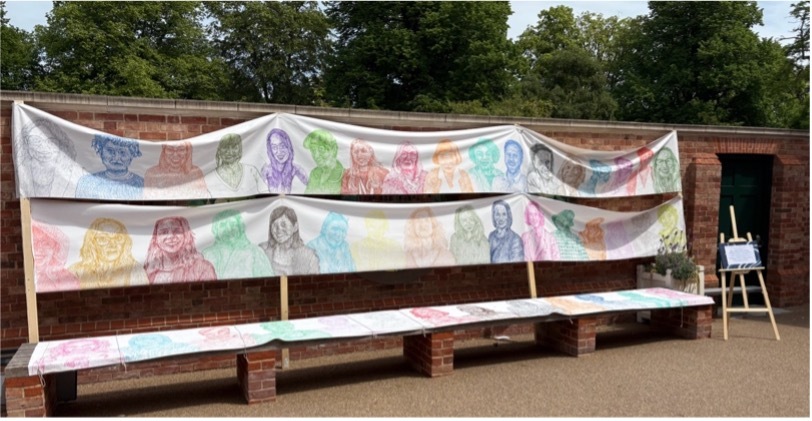
Image: John Yayen's 50-foot Indian ink mural
Being Seen: Encouraging nurses to recognise themselves as confident, capable, and creative individuals is central to strengthening the profession, alongside creating opportunities to publicly share personal stories and identities. Increasing visibility through the Special Interest Group (SIG) and peer recognition plays an important role in building this collective presence, with practical actions including joining the Nursing SIG and adding your voice to the Nursing SIG map.
Being Heard: Supporting members to publish their work is a key priority, including providing access to supportive journals that value and champion creative health perspectives. Alongside this, offering peer review opportunities helps strengthen and refine work before publication, building confidence, quality, and a collaborative culture of shared learning within the community.
Being: Strengthening the profession through education, research, leadership, and strategic partnerships. This includes reinforcing nursing leadership in creative health within education and curricula, while embedding practice locally and regionally to ensure it is rooted in real-world contexts. National alignment is also key, connecting with wider SIGs, policymakers, and maintaining regular meetings and events. Alongside this, there is a commitment to increasing the visibility of research—particularly for PhD-level work—and encouraging collaborative writing. Developing and connecting leaders within the field is essential, as is building strategic partnerships with organisations such as the Royal College of Nursing, Nursing and Midwifery Council, National Institute for Health and Care Research, and local charities. Networking is to be supported through social media, mentoring, and skills-sharing initiatives, while a broader aim of transformation promotes innovative and gender-transformative approaches to help rebalance power within nursing.
Overall, the day offered a compelling blend of policy insight, lived experience of nursing, and creative practice—demonstrating that nursing is not only a clinical profession but a deeply human, creative, and relational one.
A key focus of the day was development of Nursing Special Interest Group (SIG) https://ncch.org.uk/nursing-sig-for-creative-health , which is building momentum as a national network for creative health. The SIG’s ambition is bold: to build a connected, visible, and influential community that reshapes how nursing is understood and practiced.
The Being Seen, Being Heard, Being Summit and Exhibition was curated by Dr Marion Lynch with the aim to make nurses and nursing visible through the arts, in particular the embodiment aspect of nursing care and the issues facing a gendered profession.
Dr Lynch curated the exhibition to bring together 10 installations to showcase ‘nursing ways of knowing’ and ‘being’ a nurse rather than what nurses do.
Also, Dr Lynch’s additional accompanying personal tour of Kensington Palace was a fantastic opportunity for attendees at the end of the day to understand how heritage and health intersect.
The Art of Nursing CIC is a community access partner with historical royal palaces, so Dr Lynch matched the design of the summit exhibition to the Palace Tour,I) the concept of a gallery of summit participants compared to the gallery of public painted on the Kings staircase showing co production, ii) the nurses heads matching statues on the palace, and iii) the gowns showing how capes can be used as ways of making one more visible (Kings and Queens) and invisible (nurses and women living with the menopause).
Throughout the day the summit was anchored in a range of activities, discussions, and immersive art experiences all curated by Dr Marion Lynch, The Art of Nursing CIC, including:
FROM CHALLENGE TO OPPORTUNITY:
Dr Justin Varney-Bennett’s keynote framed the urgency of change. The NHS faces rising demand from an ageing population, widening inequalities, and limited resources. Justin noted from the Darzi Review (2024) it is clear: the system is under significant strain, and rebuilding trust requires honesty and transformation. Central to this transformation are the NHS’s three major shifts:
- From treatment to prevention
- From hospital to community
- From analogue to digital
Justin noted that creative health should be positioned not as an “add-on” but as a vital approach to achieving these shifts. By engaging people emotionally, socially, and culturally, creative practices can influence behaviour, improve wellbeing, and foster resilience in ways traditional clinical interventions often cannot.
CREATIVE HEALTH IN PRACTICE:
The summit highlighted how creative health operates across a spectrum—from universal activities that promote wellbeing to specialist interventions embedded in clinical pathways.
Clare Cable, CEO of Burdett Trust spoke of the use of the arts as part of developing the profession.
Through a creative activity lead by Dr Marie Clancy participants explored how nurses see their roles, and how using creative approaches can:
- Raise awareness and deepen understanding
- Support behaviour change and prevention
- Enhance participation and connection
- Contribute to treatment, recovery, and end-of-life care
Importantly, this work is already happening across systems—through social prescribing, arts therapies, and integrated community models.
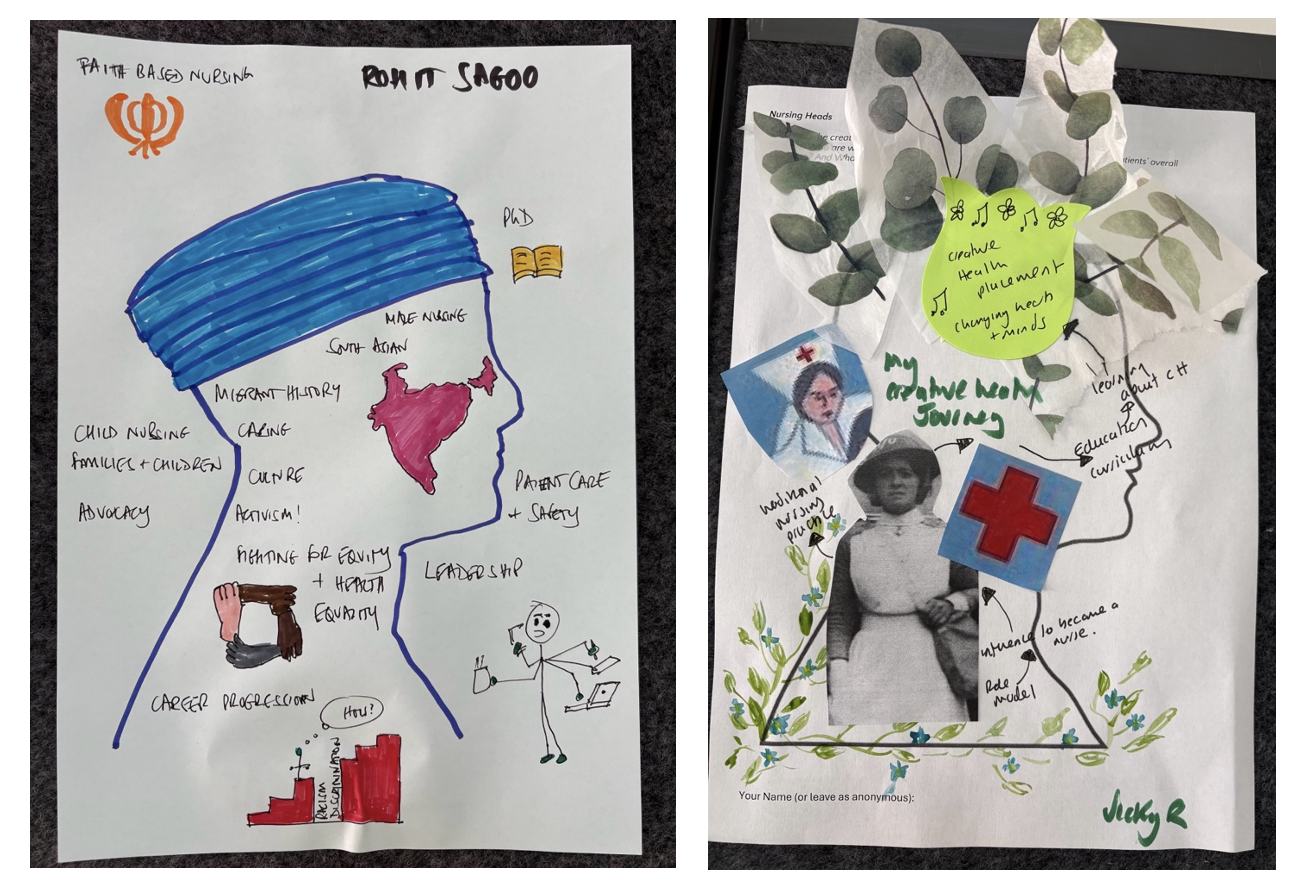
Image: Artworks created during Nursing Heads Activity
FROM STRATEGY TO ACTION:
The summit did not stop at vision, Dr Vicky Ridgway ran a World Cafe which outlined practical next steps, including:
- Developing a creative health toolkit
- Launching workshops and narrative programmes
- Expanding networks and partnerships
- Supporting research visibility and collaboration
There was also a clear commitment to feminist-informed and collective approaches—recognising the historical and ongoing dynamics within a predominantly female profession.
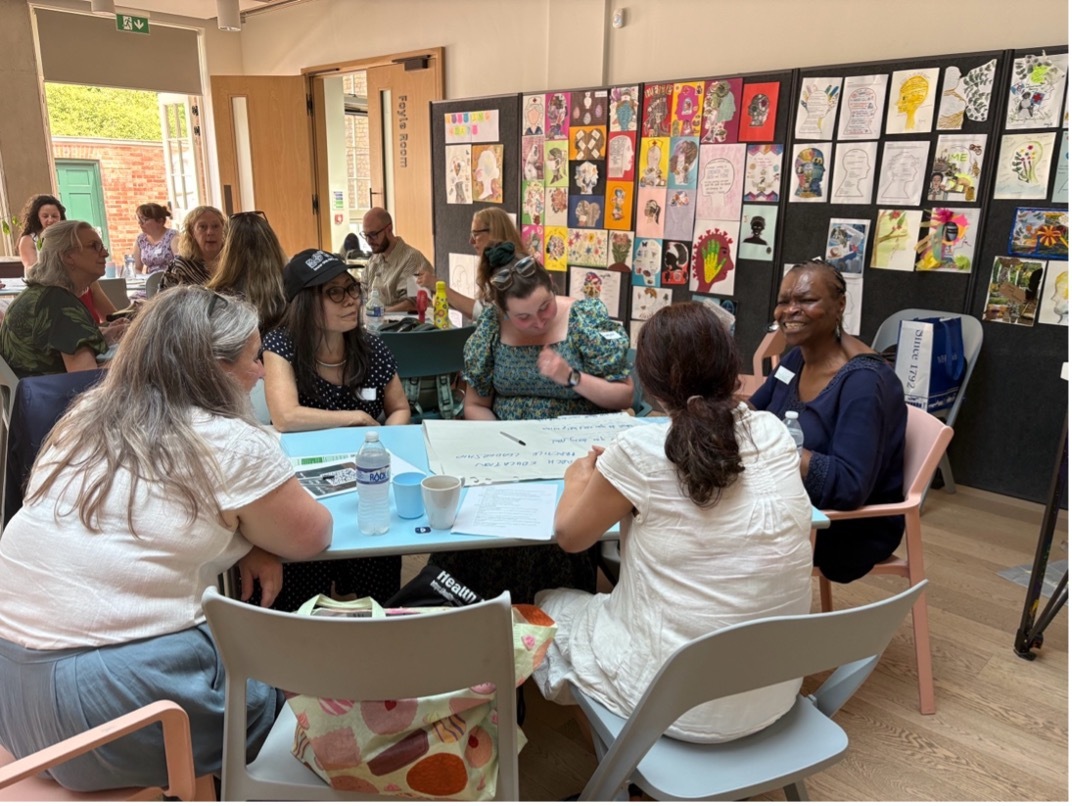
Image: World Cafe Activity
SUMMIT EXHIBITION: MAKING THE INVISIBLE VISIBLE
Alongside the discussions, the Summit Exhibition offered an immersive and emotional counterpoint—bringing to life the often unseen, embodied, and creative dimensions of nursing.
Celebrating Identity, Belonging, and Creativity: John Yayen is a pioneering Filipino nurse and contemporary artist whose work explores themes of belonging, migration, resilience, and identity. For the summit exhibition, John created a 50-foot Indian ink mural featuring 50 faces of people working in the nursing and creative health spaces. Representing diverse backgrounds, experiences, and roles across the sector, the work celebrated the people exploring, shaping and contributing to creative health in different ways. The mural symbolised commitment, and possibilities, on how creativity can support healthcare professionals, patients, communities, and wider society.
Capturing the Voice of Nursing: Dr Marie Clancy’s “Heads of Nursing” installation brought together sculpture, poetry, and visual art developed through workshops with university students, academics, and practitioners, as well as work created in clinical spaces. As a nursing poet, artist, and academic, Dr Marie Clancy facilitated these workshops to capture diverse perspectives on nursing and to explore the role of creative health through the eyes of those working holistically with patients, service users, and families. The summit exhibition featured head sculptures placed on each table alongside wall-mounted collages, paintings, and poetry, collectively revealing how nurses understand their roles—not only as caregivers, but as holistic practitioners embedded within communities and relationships.
Capturing the legacies of nursing through a Story of Migration, Memory, and Care: “The Cape of Home, Health and Hope” Marion Lynch’s work traced four generations of nursing across continents including Ireland, Hong Kong, Rwanda, and Australia. Through textiles, photographs, and maps, it explored what nurses carry with them—skills, histories, and a sense of belonging that transcends borders.
Visibility, Gender, and Health: In “Can You See Me Now?”, artist Nicky Riding addressed menopause and midlife experiences. Through sculpture and installation, the work challenged assumptions about ageing and opened urgent conversations about workplace culture and gender equity in healthcare.
Dementia, Identity, and Relationships: Mrs Drake’s Lace offered a deeply personal reflection on dementia, combining delicate lacework with written words. It invited visitors to see beyond diagnosis and recognise the enduring identity, dignity, and relationships of people living with dementia.
Spaces of Reflection and Emotional Truth: The Linen Cupboard created a quiet, intimate space where visitors could read poems written by nurses, patients, and artists. It evoked moments of pause—echoing the hidden emotional landscapes of healthcare, where care often happens in fleeting, unspoken moments.
Heritage and Public Health: Marion Lynch’s Queens, Vaccines and Public Health Palace Tour transported participants through history, highlighting how seemingly small acts—such as early vaccination practices—have saved countless lives. It connected past innovation with present-day public health challenges.
National HIV Story Trust (in partnership with the RCN), shared the HIV stories installation featuring experiences of nurses working in England with people living with HIV in the 1980s. https://nhst.org.uk/
Art of Care: Charlotte Mann, artist and teacher at the Royal Drawing School shared part of the installation Art of Care. https://royaldrawingschool.org/artists/charlotte-mann
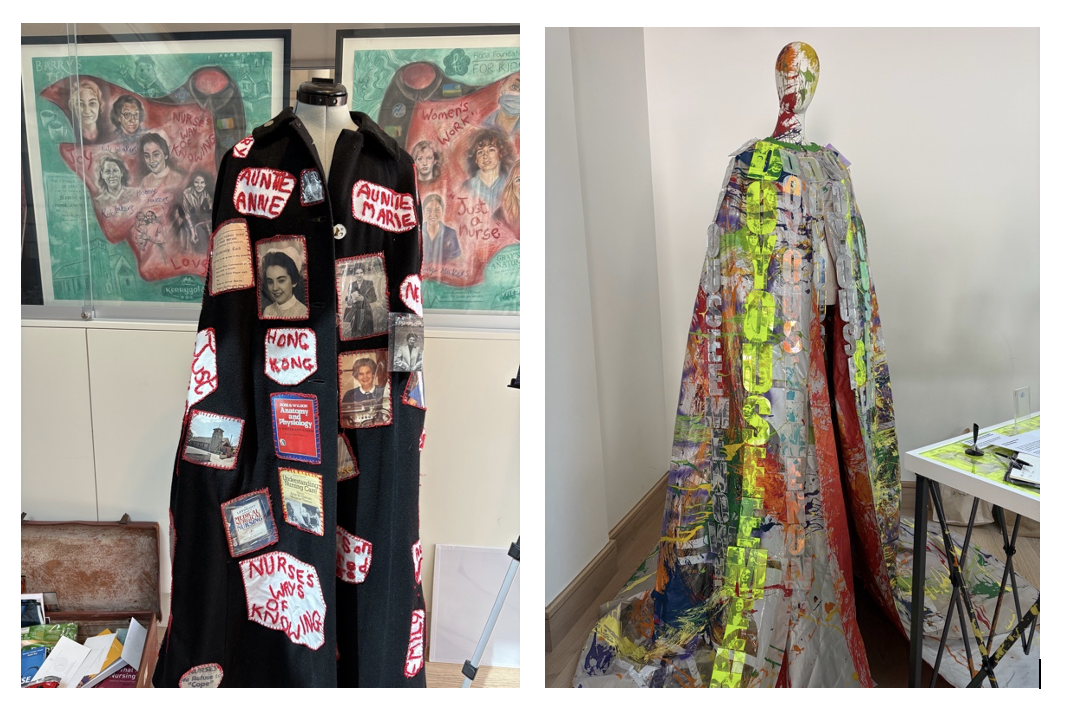
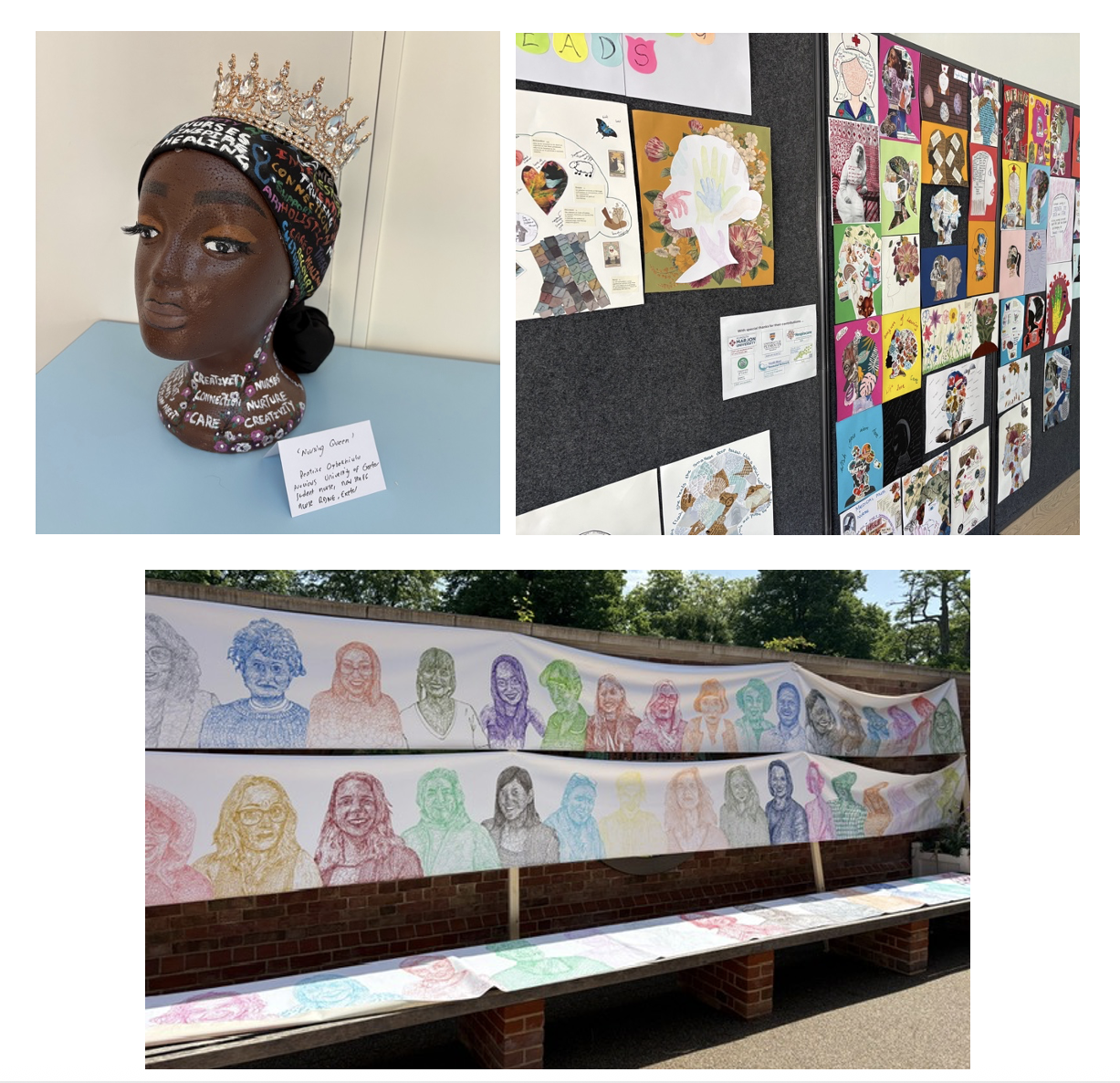
Images: Artwork showcases (order top right to bottom): The Cape of Home, Health and Hope; Can You See Me Now?; Dr Marie Clancy’s “Heads of Nursing” heads and artwork installations; John Yayen's 50-foot Indian ink mural
FINALLY, A COLLECTIVE CALL TO ACTION
The summit made one thing clear: creative health is not peripheral—it is essential.
By bringing together evidence, policy, lived experience, and artistic expression, the day demonstrated a new way forward for nursing—one that values creativity as much as clinical expertise. The creative session and immersive showcases in particular, reminded us that behind every system, policy, and profession are human stories. Stories of care, identity, resilience, and possibility.
As the Nursing SIG grows and the movement gains momentum, the challenge now is to turn this energy into sustained action—embedding creative health into everyday practice, education, and policy, because, as the summit showed so powerfully, when nursing is seen, heard, and fully expressed, it has the potential to transform not only healthcare—but society itself.
Written by NCCH General Manager
Alexis Butt