Neighbourhood health needs creativity: reflections from NHS ConfedExpo 2026
This year’s NHS ConfedExpo felt different. There was more energy, more optimism and, perhaps most importantly, a growing sense that the conversation has moved beyond whether we need to change to how we make change happen.
The phrase I heard more than any other was “taking off our lanyards.” It became shorthand for leaving organisational hierarchies at the door and coming together as people, partners and communities to tackle complex challenges.
That idea felt especially relevant to creative health, where collaboration, lived experience and shared ownership are central. The conference offered a valuable opportunity to show how our sector can contribute, and it was encouraging to see that contribution welcomed and understood.
Neighbourhood health was everywhere — not as a buzzword, but as a genuine focus for the future of health and care. Alongside it came extensive discussion about AI and digital transformation.
Yet one familiar question remained: how do we balance national direction with the flexibility that local systems need to build on their own communities, relationships and strengths?
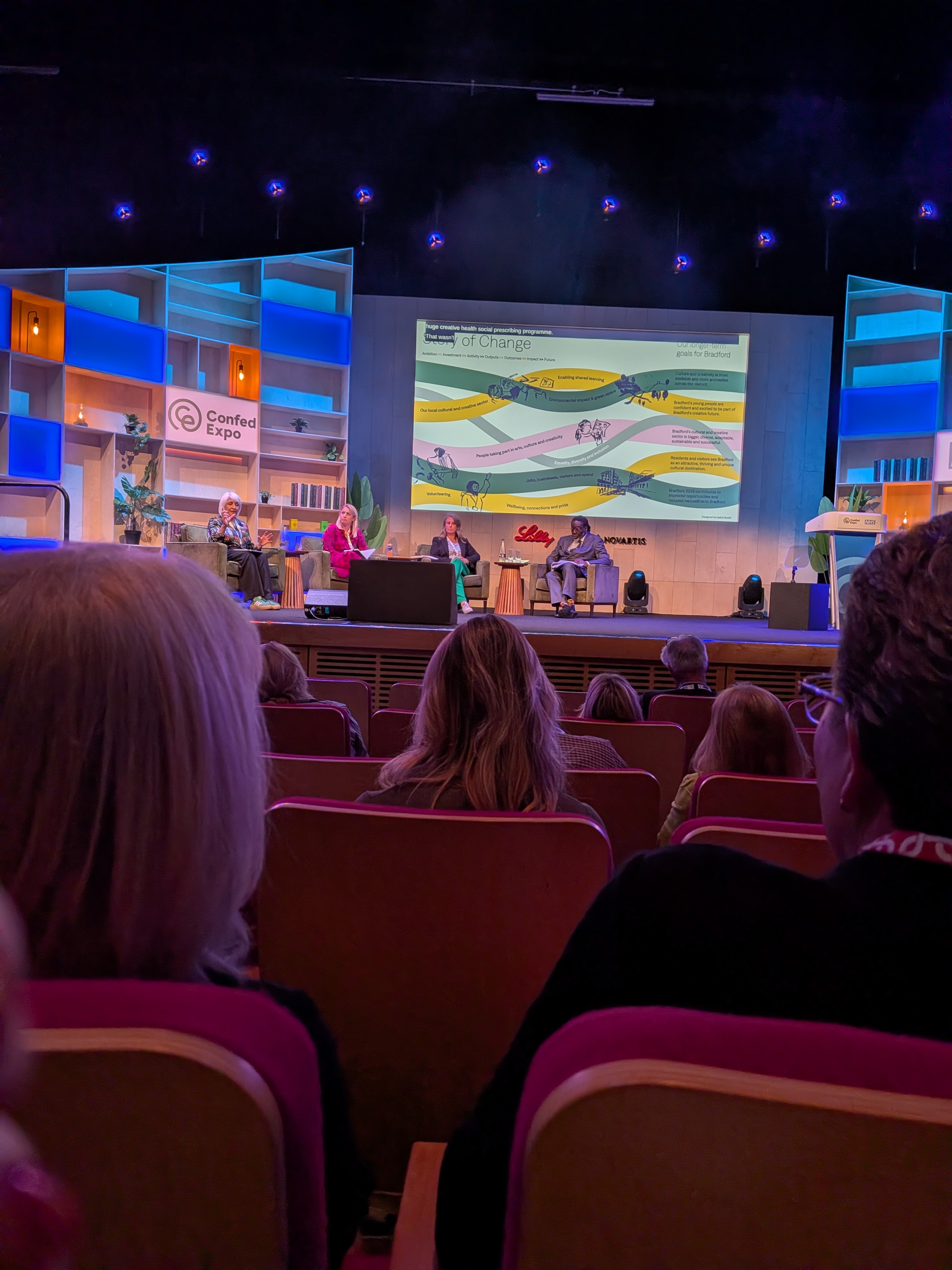
It was particularly encouraging to see creative health enjoying much greater visibility than in previous years. The dedicated creative health session on the first day attracted real interest and was chaired by Lord Victor Adebowale, Chair of the NHS Alliance.
The panel featured Hollie Smith-Charles, Director of Creative Health at Arts Council England; Ellen Rule, Chief Executive at Herefordshire & Worcestershire Health & Care NHS Trust; and Shanaz Gulzar, Creative Director of Bradford Culture Company. Together, they explored the value of creativity for health and wellbeing, the challenges and opportunities involved in scaling innovation, the role of creative health champions within systems, and the potential to attract additional resources.
It was heartening to hear Lord Adebowale describe the session as his favourite of the conference and encourage delegates to learn more about the powerful benefits of creativity for health and wellbeing.
There were also clear reminders that significant challenges remain, including:
- unaligned cultures and different professional languages;
- persistent inequalities;
- the need for meaningful behaviour change; and
- funding models that do not yet fully reflect the value of the voluntary, community and social enterprise sector, including the creative and cultural sector.
Even so, there was a stronger sense than before that this sector is increasingly recognised as an essential partner rather than an optional extra.
As always, some of the most valuable moments happened between sessions. I came away with a notebook full of new contacts, ideas and inspiring speakers whose work is not part of the creative health ecosystem – yet!
Over the coming weeks, I’ll be following up those conversations to explore how we can bring some of those voices into the National Centre for Creative Health’s work, strengthening connections between creative health, neighbourhood health and the wider health and care system.
For me, the biggest takeaway was that creative health is no longer on the margins of these conversations. It is becoming part of the mainstream discussion about how we create healthier communities.
Our job now is to build on that momentum: sharing evidence, connecting people and helping health and care systems put collaboration into practice. Taking off our lanyards is only the first step; what matters is what we build together afterwards.
By Jayne Howard, Head of Programmes