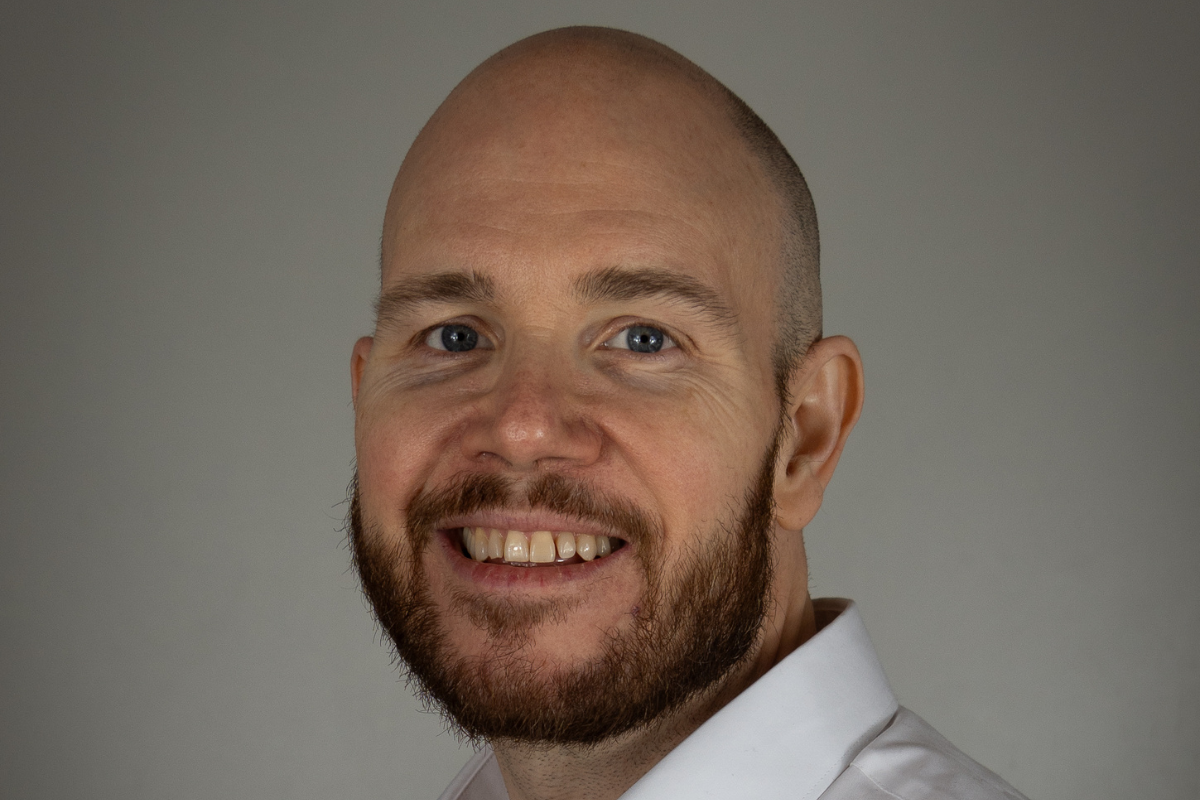
Creative Health: A Conversation with Dr Justin Varney-Bennett
Dr Justin Varney-Bennett, Creative Health Lead at the Department of Health and Social Care, talks about why the role matters, what it can realistically achieve, and what he wants from the sector.
Q: How would you describe the Creative Health lead role in your own words?
Within the Department of Health and Social Care (DHSC), regional public health directors hold a number of topic leads where we act as senior public health advisers. This one’s slightly different because there isn’t a policy team I’m advising.
So I see it as a bit of a matrix role. It’s about working across different policy teams within the department to help them think about creative health. It’s about working with Department for Culture Media and Sport (DCMS) and Arts Council England to help connect them into health conversations. It’s also about supporting the NHS, social care and the creative sector to work better together.
It’s really a connector role — helping people work out what the opportunities are in the reality of the environment we’re in at the moment.
Q: What motivated you to take it on, given your already substantial portfolio?
I have six or seven different policy lead areas already. But I’ve had a similar brief before when I was in Public Health England, and as Director of Public Health in Birmingham we did a lot of work on creative health.
I felt it was something where I could genuinely help support ministers with their ambitions, particularly around the 10-year health plan. The opportunity came up in conversation with the Second Permanent Secretary, and it felt like a good professional opportunity
Q: What does “creative health” mean to you personally?
For me, creative health encapsulates all the ways in which the creative sector interacts with our health and wellbeing.
I see it as a spectrum. At one end, you’ve got creative activity being used to educate and raise awareness — public art, museum exhibitions, theatre in schools. Then you’ve got participation in creativity, which may or may not have a therapeutic focus. At the other end of the spectrum, you have clinical art therapies.
When we talk about the creative sector, we often talk about it as if it’s one thing — but it’s hugely diverse. From potters to museums to theatres, musicians, film and television, graphic designers and authors, to name but a few. There’s a lot to get curious about.
I don’t see creative health as a public health issue in itself. I see it as a tool — a vehicle. In the same way that working with faith communities can be a way of engaging different audiences, creativity is another way of reaching people and improving outcomes.
Q: Where did your interest in this area begin?
Creativity was part of my life from school — lots of drama. I even had an early career toss-up between acting school and medical school.
Professionally, one of my first consultant roles in Barking and Dagenham involved working with a small graphic design company to rethink how we communicated health messages — using humour, different visual approaches. We also commissioned an aerial dance-for-health programmes.
Later, in Public Health England, I worked more on the policy side with Arts Council England. And in Birmingham, I had the chance to work closely with the city’s cultural institutions, embedding researchers and really exploring what was possible whilst also measuring impact in ways that matter to public health.
That opened my eyes not just to the opportunity, but to the challenges — particularly around funding streams and being realistic about what’s sustainable.
Q: Why do you think now is the right time for a national creative health leadership role?
I suppose my view is it’s always a good time to start planting seeds — even if you may not be around to see the tree grow. If you don’t plant the seeds, the tree is never going to grow.
In times when you are consumed with the challenges of today it is important to protect some time for planting and planning for the future, but it is hard to make this space. There are real opportunities in the 10-year health plan and in neighbourhood health systems to think about how creative organisations can partner locally.
But we also have to be honest about the financial reality. Creative health is never going to be a massive funding stream for the arts. We need to be pragmatic about that.
And to be clear — it’s just me, there isn’t a dedicated budget or team at the moment. So it’s about influence, connection and creating space for conversations.
Q: What will the role practically involve?
There are three main strands I’m developing.
The first is around health and work in the creative industries. The sector is largely freelance, occupational health is variable, and people are often heavily reliant on their physical and mental health to do their jobs. Yet we don’t really talk about workplace health in the creative industries despite this being an important sector for the UK economy. In different parts of the sector there’s a significant need for more occupational health support, which has been shown repeatedly through surveys with people working in the creative industries.
The second strand is translating evidence into action. We now have a huge evidence base for creative interventions, but it’s not always written in a way that translates into commissioning decisions. So I’m working with colleagues to turn systematic reviews into practical toolkits and to amplify strong, focused interventions — for example, dance for Parkinson’s. I’m hopeful about dance and singing as areas where we might embed pathways of care by taking specific disease angles in the narrative to be focused in our approach rather than promising all outcomes for all interventions..
The third strand is influencing policy language to create more explicit consideration of creative health. Sometimes it’s about the sentences woven into strategies that create a doorway for the creative sector and health system to connect. And I’m very keen we don’t forget social care in this — creative participation can be transformative in that space.
Q: How does creative health fit into mainstream NHS and social care priorities?
Creative Health provides a way of delivering some of the NHS and Social Care priorities, often alongside clinical management and pathways to achieve better outcomes for patients. It’s important to distinguish between the creative sector playing a role in partnership, being funded by health for delivery, or funding something to support health as part of either charitable aims or as a collateral benefit.
We’re not in a world where there’s lots of grant money floating around. Creative organisations will be competing with other providers. If you’re in that space, you have to demonstrate impact in the way other providers do — measurable outcomes, cost-effectiveness, return on investment.
One of the sadnesses is that many creative programmes have been grant funded, non-recurrent, and never mainstreamed. They may have lasted several years, but they didn’t get core funding, often because the nature of the grant funding meant they weren’t learning how to measure impact in ways used for mainstream contracts.
So my advice is: be round the table as a partner, especially in neighbourhood contexts — but don’t expect that to automatically lead to lots of money.
Q: What are the biggest barriers to making creative health mainstream?
Measurement is probably the biggest one.
I see a lot of beautiful case studies with powerful anecdotes. But when I try to work out the return on investment, very few can demonstrate measurable outcomes that demonstrate impact in the way that health measures impact and because of this it’s hard to demonstrate these are cost-effective and competitive with other provider offers.
The research is improving — I meet researchers all the time who say, “I’ve got this study in flight.” But it’s going to take two to three years before that pays back. And then the sector has to shift to routinely collecting data.
We haven’t quite got the cultural measurement toolbox sorted yet and I think this needs to be a real priority for the sector, especially thinking about how we can measure things in the same way but in the context of different arts disciplines.
I also think there’s an over-emphasis on wellbeing. Wellbeing interventions are great — but they’re hard to monetise, as there is no specific funding for wellbeing interventions so no one pays for them. In the current financial climate, that matters.
Q: How can creative health help address health inequalities?
Creative interactions can reach communities of identity and experience in ways other interventions can’t — through content, tailoring and representation.
But we have to be careful not to oversell it as a panacea. Some brilliant examples are quite niche and specialised and this can be really effective but these have specifically skilled and trained staff working with vulnerable individuals within a carefully supported environment and so aren’t immediately transferrable.
I’d encourage organisations to be clear about what they want to do. You don’t need to do everything. Be specific about your unique contribution. That clarity helps with credibility.
Q: If we fast forward five years, what would success look like?
In a dream world, we’d have a joint creative health unit and a strong policy drive embedding creativity into all policies.
More realistically, I’d like to see:
- A creative sector that’s pragmatic and able to demonstrate impact clearly.
- Evidence embedded into undergraduate healthcare training so we’re not retrofitting awareness later.
- A shared language across the sector about the spectrum of creative health.
- One or two pathways of care where creativity is properly commissioned and embedded structurally.
I often talk about creating ripples. No individual can create a wave big enough on their own. It’s about timing the ripples so that together they become waves — and it’s the waves that move the shoreline.
Q: What excites you most — and what worries you?
What excites me is the sheer diversity, the intellectual challenge, and the brilliant, passionate people I keep meeting. It’s a privilege to shine a light on that work.
What worries me is capacity — mine especially!, and managing expectations. There are lots of people who want to talk, and only so many hours in the day.
My role is to help the creative sector support ministerial ambitions and improve population health. That’s not always the same as securing funding or sustainability for the arts. Being honest about that is important.
Q: What would you say to artists, practitioners and public health professionals working on the ground?
Three things.
First: talk to each other. Invest in networks and partnerships. Where we see the greatest gains, people have got past their egos and are working collaboratively.
Second: think beyond traditional health models. Workplace health in the arts, Jobcentre Plus, enrichment in older people and social care — it’s not all about A&E attendances and hospital waits. Be curious about other spaces.
And third: keep being creative. What inspires me most about this sector is the resilience and passion. I spoke to an author who’d been rejected hundreds of times before being published but kept creating and kept trying, similarly actors who’ve auditioned for decades and kept going because at the heart of it is their personal passion for being creative.
Keep hold of that kernel in yourself that sparks creativity — and bring that to the table.
Justin Varney-Bennett is a member of the NCCH Creative Health Champions network for leaders and decision-makers within health and care systems which will help to inform his work in this role and provide a space for him to share progress. You can find out more about becoming a Champion here.