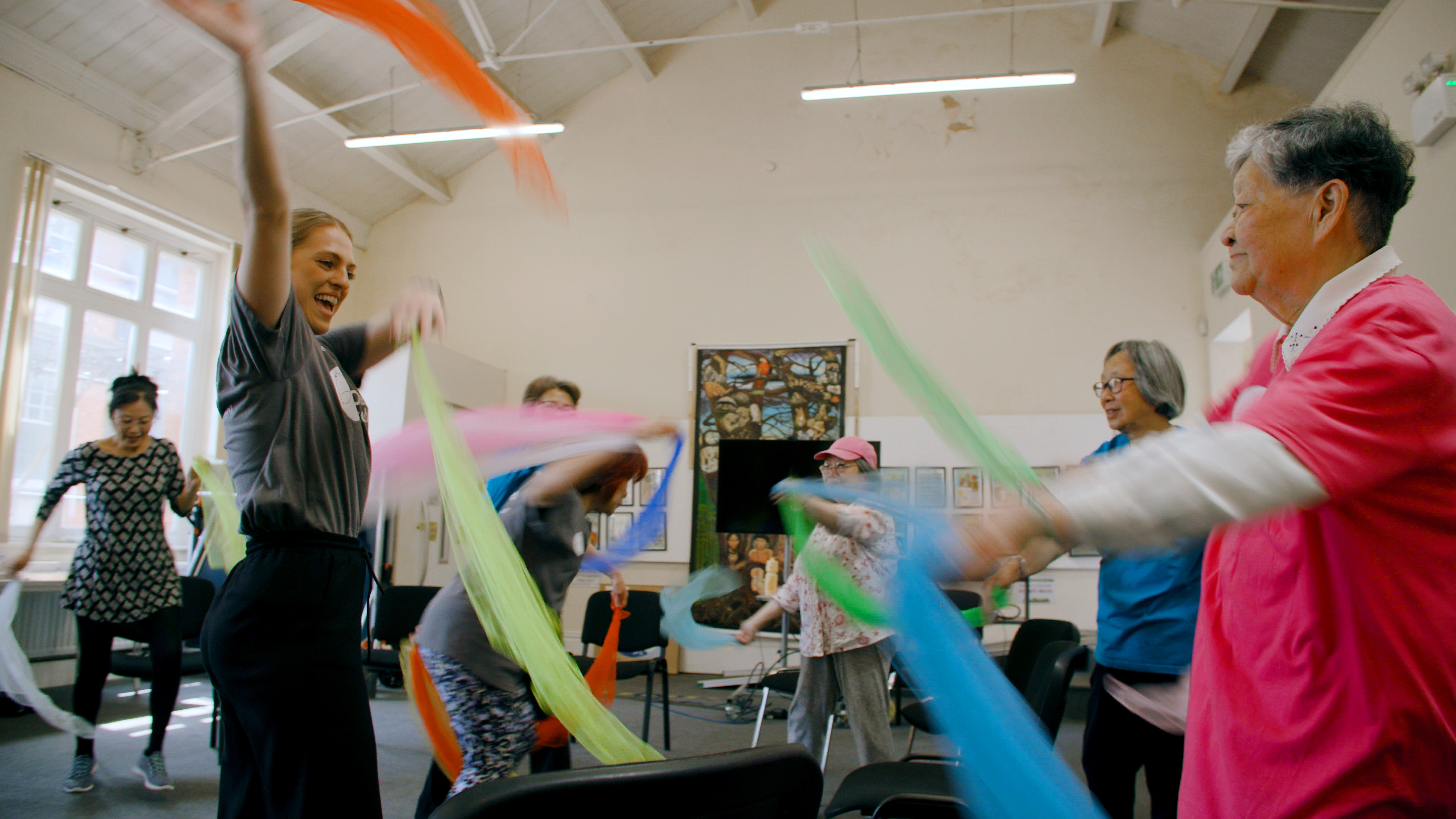
Dance and Movement for Healthy Ageing
As of March 2026, we are delighted to share that NCCH’s submission to the UK Parliament’s Health and Social Care Committee inquiry on Healthy Ageing: physical activity in an ageing society has been selected as one of the pieces of evidence considered for this policy area, a notable achievement given the high volume of responses typically received for consultations of this scale. You can read the full submission here.
In June 2025, the Committee launched the inquiry, and NCCH was pleased to contribute written evidence drawing on national and local case studies to show how dance and movement can help older people stay healthier for longer.
Why Dance Matters for Healthy Ageing
Dance is more than just art or leisure – it’s a proven, cost-effective health intervention. Evidence shows that dance and movement can:
- Reduce frailty and improve strength and balance
- Cut falls by 58% when combined with physiotherapy
- Lower the risk of dementia (£149m NHS savings annually) and Type 2 diabetes (£157m annually)
- Reduce cardiovascular death risk by 46%
- Improve outcomes for people with COPD, chronic pain, and Parkinson’s
- Prevent loneliness, support mental health, and improve wellbeing
These aren’t just statistics – they represent a shift towards preventative, enjoyable, and socially connected ways of ageing well.
Creative Health in Action
Across the country, dance and movement are already being embedded into health and social care in innovative ways:
- Local authorities: Birmingham City Council – pioneers of “Creative Public Health” – have placed public health researchers into cultural organisations to co-develop health-focused programmes like dance. Other Directors of Public Health have demonstrated their commitment to creative health provisions, like dance and movement, in their annual reports – including Brighton and Hove, Northumberland, and East Sussex.
- Health systems: Gloucestershire Integrated Care Board (ICB) has embedded creative health into clinical pathways. By collecting data on referrals, NHS numbers, and validated health outcomes, they’ve built a dashboard that tracks the impact of creative interventions, enabling commissioning decisions based on both equity and effectiveness.
- Festivals: Festival formats such as the Hull/ Coventry and Bradford City of Culture have demonstrated the role of cultural leaders and Public Health partnerships in alternative forms of health promotion. These highly effective, arts and community-shaped health promotions are a feature of Creative Aging work, from organisations such as Luminate and Re-Live, and festivals such as Age Against the Machine Festival of Creative Ageing.
- Targeted programmes: Aesop’s Dance to Health trains dance teachers in physiotherapy-informed techniques, attracting and retaining more participants than traditional physio classes. Breathe Dance for Strength and Balance has shown measurable gains in gait, balance, and fall reduction. English National Ballet’s Dance for Parkinson’s is embedded in NHS pathways, showing improvements in motor function and mood.
You can also watch their new vimeo film here.
Tackling Inequalities
Older people in disadvantaged communities are often least likely to access arts and physical activity opportunities, despite standing to benefit the most. Delivery models that make a difference include:
- Co-created programmes that reflect cultural preferences and community priorities
- Hyper-local delivery through neighbourhood centres, arts forums, and VCSE partners
- Consortia models, like Gloucestershire’s Creative Health Consortium, which unite third-sector providers and streamline NHS commissioning
- Bridging roles, such as Creative Health Leads or social prescribing link workers, who hold in-depth knowledge of local creative opportunities and their health benefits
These approaches help overcome barriers like ageism, clinical language that discourages participation, and lack of culturally relevant provision.
Making It Work
So how do we deliver dance and movement at scale? Our evidence points to several enablers:
- Commissioning with evidence: Use outcome data to show impact on falls, mental health, long-term conditions, and co-morbidity, making the case for long-term investment.
- Asset-based approaches: Shift the narrative from older people as a “burden” to recognising their strengths and potential – something lived-experience projects like the Banbury Heritage Project have shown is critical.
- Cross-sector partnerships: Health services working hand-in-hand with arts organisations, social care, and local government can create interventions that are trusted, inclusive, and sustainable.
- National strategy: A cross-departmental creative health strategy would ensure consistent delivery, scaling up local success stories without losing cultural relevance.
System Enablers
If we are serious about using physical activity to support healthy ageing, government and health systems should:
- Prioritise prevention: Fund community-based, enjoyable interventions like dance alongside clinical services.
- Invest in infrastructure: Support Creative Health Networks, consortia, and community-led forums that enable collaboration and shared learning.
- Embed bridging roles: Ensure Neighbourhood Health Services include Creative Health Leads who can connect people with activities that fit their needs and cultures.
- Promote public awareness: Campaigns should position dance as a joyful leisure activity with proven health benefits – not just another form of exercise.
A Vision for the Future
Healthy ageing isn’t only about living longer – it’s about living well. Dance and movement bring strength, balance, and connection, but also joy and meaning. They are cost-effective, evidence-based, and deeply human interventions that align with the NHS ambition to shift towards prevention and community-based care.
As the Select Committee considers the future of physical activity for our ageing population, we believe the evidence is clear: it’s time to put dance and movement centre stage in health policy.
Acknowledgements
This blog article was developed by Jane Hearst, our Research and Policy Manager, in August 2025, summarising her select committee response that was submitted in the same month. Her written evidence drew on examples and evidence from a wide range of organisations, projects, and sources.
Practice and applied evidence:
- Birmingham City Council (Creative Public Health programme + Research Officers)
- Brighton and Hove City Council (Annual Report of the Director of Public Health, 2018)
- Northumberland County Council (Annual Report of the Director of Public Health, 2019 + asset-based approaches)
- East Sussex County Council (Annual Report of the Director of Public Health, 2023/24)
- Bradford City of Culture
- Hull City of Culture
- Coventry City of Culture
- Luminate (Creative Ageing work)
- Re-Live (Creative Ageing work)
- Age Against the Machine Festival of Creative Ageing
- Creative Ageing Development Agency (challenging ageism)
- Banbury Heritage Project (on Lived Experience Experts)
- Gloucestershire Integrated Care Board (Creative Health data dashboard)
- Gloucestershire Creative Health Consortium (lead provider model)
- Aesop and Later Life Training (training dancers in the PSI - Postural Stability Instructor - certification)
- Breathe Dance for Strength and Balance
- Dance to Health – check out their fabulous new video release
- Dance for Parkinson’s (English National Ballet / SHAPER programme)
- Number 11 Arts (Birmingham) and Local Arts Forums
- Move Dance Feel (supporting women with cancer)
- NCCH Creative Health Associates (bridging roles)
- Barnsley Creative Health Partnership
- Leicester Creative Health Network
- Coventry and Warwickshire Creative Health Alliance
- Leicester City Council (Community Wellbeing Champions; Community Connectors pilot)
- Create Gloucestershire (Create Local community chest initiative)
- Scotland’s Healing Arts initiative (endorsed by the World Health Organisation)
Research papers and reports referenced:
- Gillian De'Ath’s Creative Health and NHS Commissioning
- The Sport + Recreation Alliance’s Social Value of Movement and Dance Report
- Effects of regular dance therapy intervention on blood pressure in hypertension individuals: a systematic review and meta-analysis
- Dancing Participation and Cardiovascular Disease Mortality: A Pooled Analysis of 11 Population-Based British Cohorts
- Effects of creative dance on functional capacity, pulmonary function, balance, and cognition in COPD patients: A randomized controlled trial
- Dance for Chronic Pain Conditions: A Systematic Review
- Dance to Health: developing an arts solution to a health problem which is valued and available for all who need it
- Cultural engagement and incident depression in older adults: evidence from the English Longitudinal Study of Ageing
- Culture And Heritage Capital: Monetising the Impact of Culture and Heritage on Health and Wellbeing
- Age UK’s Index of Wellbeing in Later Life
- National Institute for Health and Care Excellence (NICE) guidelines on older adults and independence
- Baring Foundation’s Older and wiser? Creative ageing in the UK
- Baring Foundation’s On Diversity and Creative Ageing
- NCCH Creative Health Review
- Arts, Culture and Heritage: Recent Trends in UK Workforce and Engagement in England
- The social value of place-based creative wellbeing: A rapid review and evidence synthesis
- Dance as an intervention for people with Parkinson's disease: A systematic review and meta-analysis
- Mental Health Link Workers in Neighbourhood Care: a theoretical application of the Creative Health Communication Framework (currently unpublished)
- The Creative Health Communication Framework
- Evidence of the Effects of Dance Interventions on Adults Mental Health: A Systematic Review
- Creative Health Associate Programme report, Beth Crosland and Gemma Buckland (currently unpublished)
- Arts and Cultural Engagement as a Vital Public Health Asset: Policy Briefing
- Fit For The Future: 10 Year Health Plan for England