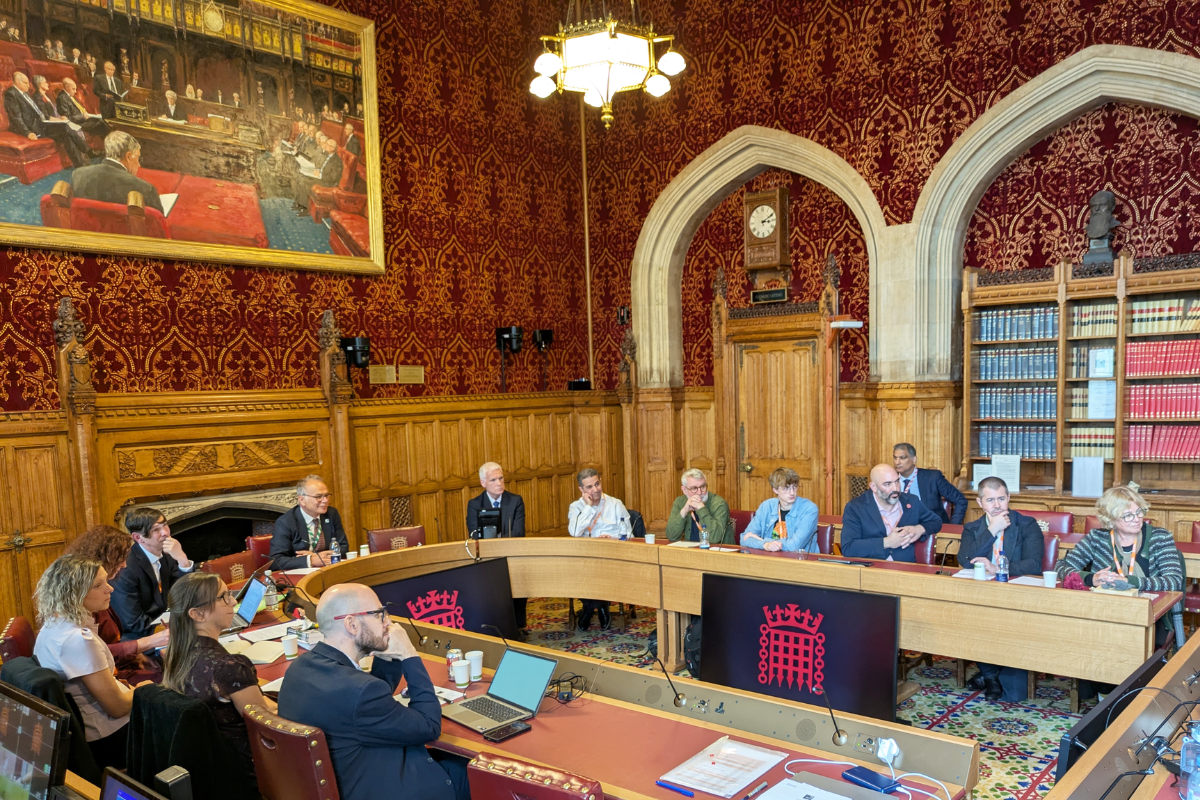
Digital Health and CreaTech: Reflections on our Recent APPG Roundtable
At a recent All-Party Parliamentary Group (APPG) on Creative Health roundtable, the focus was on digital health and CreaTech. There, we explored how creative approaches, delivered through digital tools, are beginning to shape health and care in the UK.
Speakers came from different backgrounds, including clinical practice, research, technology, the arts, and lived experience. Together, they described a shared story:
- Digital tools are extending the reach of creative health.
- They are helping people engage with their health in more intuitive ways.
- They are generating new forms of evidence.
- And they are doing so in ways that align closely with the direction of travel set out in national policy.
Opportunities:
Across the discussion, several themes kept returning. The first was accessibility. Digital formats make it easier to reach people who might not engage with traditional services, whether due to geography, mobility, confidence, or waiting times. This applies in schools, in communities, and within clinical pathways. It also allows creative health to operate at a scale that would be difficult to achieve through in-person delivery alone.
The second was engagement. Creative approaches already offer ways for people to connect with their health through story, movement, music, visual expression, and more. When combined with digital platforms, that engagement can be sustained over time and across platforms. People are participating in creative support via digital tools, often in ways that feel familiar and relevant to their daily lives.
A third theme was data and evidence. Speakers described how digital tools are capturing outcomes as part of the work itself. This includes real-time feedback, longitudinal insights, and forms of qualitative data that are often difficult to gather through traditional methods. There was a strong sense that this kind of evidence feels more authentic to the practice, while still offering the rigour that systems require.
Challenges:
Alongside these opportunities, there was also a consistent set of challenges. Regulation was one of the most prominent. Contributors described a landscape that is difficult to navigate, with high costs, long timelines, and a lack of clarity about what is required. This creates a barrier to entry for many organisations and slows down the adoption of work that is already demonstrating impact.
Infrastructure was another issue. Even where strong provision exists, it is not always visible or easy to access. Clinicians may not know what creative and community assets or digital solutions are available locally. Members of the public may not know where to look. Without systems that connect people to these opportunities, much of the value of creative health remains underused.
Trust also ran through the conversation. There are ongoing concerns about how digital tools are used, particularly in relation to data, ethics, and the broader impact of online environments. The discussion pointed toward the need to actively design for trust, rather than assuming it will follow.
Policy Recommendations:
These themes shaped the recommendations created by the National Centre for Creative Health (NCCH) and the APPG in our latest policy briefing, which will be shared across Government.
- The call for clearer, proportionate regulation reflects the need to reduce barriers while maintaining safety.
- The focus on infrastructure responds directly to the challenge of visibility and access.
- The emphasis on adoption within the NHS speaks to the gap between successful pilots and sustained delivery.
- And the attention to culture and education highlights the importance of embedding creative approaches more deeply within how health is understood and delivered.
This sits within a wider policy context that is already moving in a similar direction. The NHS has committed to shifts toward prevention, community-based care, and digital delivery. Digital creative health contributes to each of these priorities. It supports earlier intervention by building skills and resilience. It operates within community settings as well as clinical ones. And it uses digital platforms to extend reach and improve access.
There are also clear links to the broader digital and cultural policy landscape. Government strategies across departments, including those led by the Department for Culture, Media and Sport, continue to emphasise the role of digital innovation within the creative industries, as well as the importance of access, skills, and infrastructure. Digital creative health sits at the intersection of these agendas, drawing on strengths from both sectors.
What the roundtable highlighted is that alignment already exists at the level of ambition. The challenge is more practical: about how systems adopt and support this work in a consistent way, how barriers are reduced without compromising safety, and how innovation is connected to delivery at scale.
Event speakers:
Chair:
Dr Simon Opher MP, Chair of the APPG on Creative Health.
Speakers
- Giovanni Biglino, Associate Professor in Bioengineering, Bristol Heart Institute and Dr Sofie Layton, Artist/Researcher – Visual and Material Lab, Discovery Research Platform, Institute of Medical Humanities, Durham University: Making the invisible visible and tangible: creative translations of medical imaging data recounting and supporting patient experience.
- Kiz Crosbie, Artistic Director and CEO and Ellie Turner, Executive Director, Mortal Fools: Melva – Improving Children’s Mental Health through Interactive Storytelling.
- Dr Lisa Dowler, Artistic Director, Small Things Dance Collective: Shifting Landscapes – Nature-inspired, immersive performance through VR for children and young people at Alder Hey Children’s NHS Foundation Trust.
- Oliver Gingrich, Associate Professor in Animation, University of Greenwich: p_ART_icipate: Digital Participatory Art for Creative Health.
- Simon Glenister, CEO, Noise Solution, and Felix Rowe, former Participant: Digital Stories and AI Outcomes Analysis: No feedback forms, better data, better outcomes.
- Emilios Lemoniatis, Consultant Child and Adolescent Psychiatrist, Founder & CEO, Medical Creatives: Tech, Trust and the Creative Health Turn.
- Alan Naismith, CEO and Founder, Polyatrics Ltd and Dr Pani Sissou, GP and Director, Decorum GP Federation: Wellness Interactive Support Hub (W:ISH).
Find Out More:
To watch our APPG Roundtable on Digital Health and CreaTech, visit the YouTube recording here or below.
Or, if you would like to find out more about CreaTech case studies, explore the list below:
- Arts for the Blues
- Digital arts and culture - the perfect ‘hook’ for digital inclusion: Leeds Art & Culture Digital Inclusion Pilot
- Digital Dialogues
- Exploring Digital Techniques in Music Therapy for Young People with Complex Mental Health Needs
- Glowing Stars - a study using an educational app to prepare children for MRI scans at Leeds Teaching Hospitals NHS Trust
- HERO Academy / HEX Vanguards / Unlocking Minds: Digital Creative Health Pathways
- LifePathXR
- MELVA Digital Programme Supporting Mental Health Education
- Moments of Grace
- Music, Dementia, Technology: Designing new musical technologies for older adults' wellbeing
- NHS CaRE Project
- Noise Solution
- Ombri
- Play and See
- Place4Hope
- Arts4Us
- Screen-based Artworks at Chelsea and Westminster Hospital and West Middlesex University Hospital
- Shifting Landscapes-VR immersive performance experience for hospitalised Children and Young People
- Soul Paint
- Soundwalk in South East London
- Talk Town
- The Heart of the Matter
- Virtual reality (VR) use during intrauterine device (IUD) procedures – a London experience.
- VR-Melody
- Zeitgeist
All-Party Parliamentary Group on Creative Health:
Find out more here: All-Party Parliamentary Group on Creative Health.
Information about previous APPG roundtables are below:
Neighbourhood Health and Creative Health, November 2025:
- Click here to watch the YouTube recording.
- Read the event summary here.
- Read the Creative Health Briefing Paper The 10 Year Plan: Neighbourhood Health.
Creativity and Children and Young People’s Mental Health Roundtable, June 2025:
- Recording here.
- Read more about the event here.
- Read our NCCH briefing on Creativity and Children and Young People’s Mental Health here.